A sloped driveway is normal in Federal Way, where a lot of homes sit on ground that rises or falls away from the street. What is less obvious is that the slope changes the work your garage door does. The door itself is hung and balanced in the vertical, but the way you use it, the way it meets the floor, and the way the opener engages it are all shaped by the angle of the apron outside. Homeowners often describe the result as a door that sounds tired, an opener that labors, or a door that sits unevenly at the bottom. This article separates what you can safely observe from outside the door from the work that belongs to a technician.
What the slope actually changes
A sectional door travels on vertical tracks, then curves back onto horizontal tracks overhead. The slope of the driveway does not tilt that track system. What it does change is the relationship between the door and the floor, and the way the opener is asked to move the door over the first and last few inches of travel.
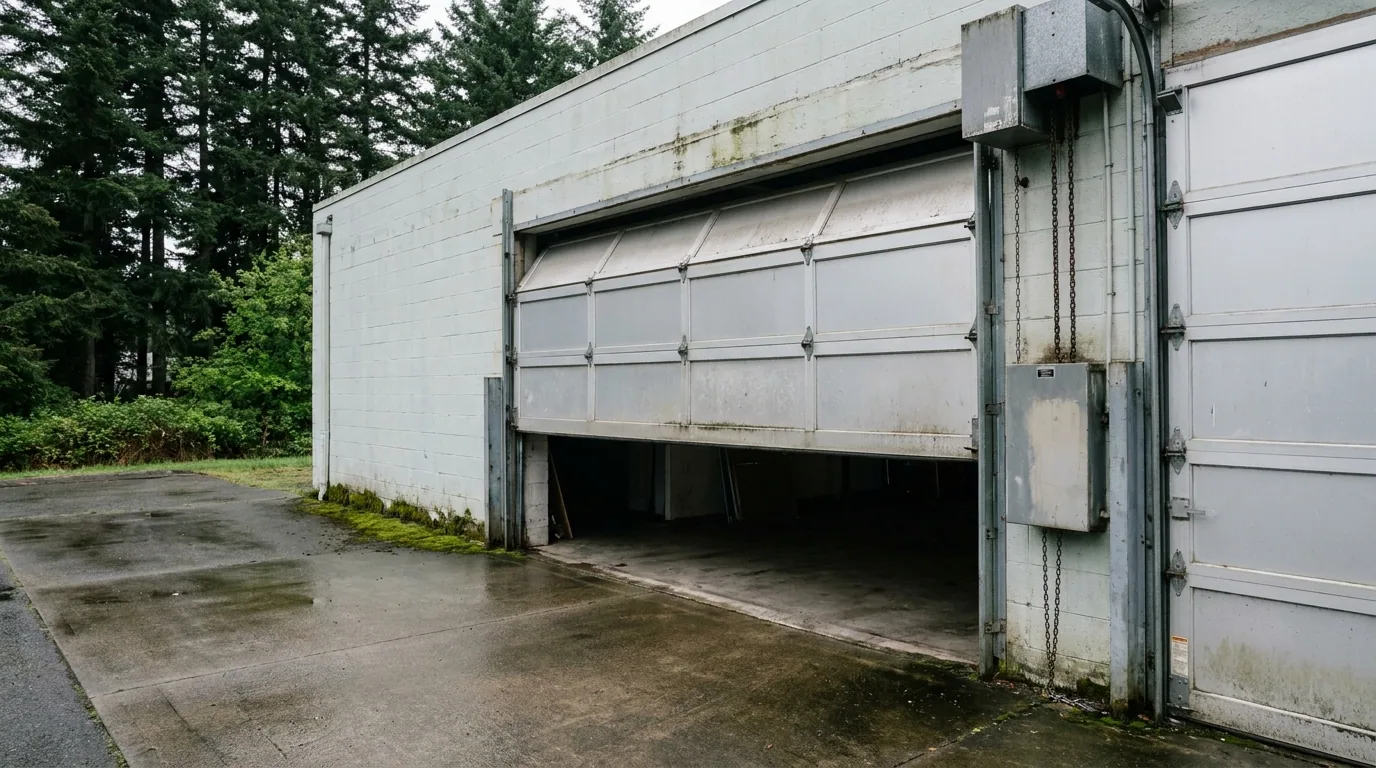
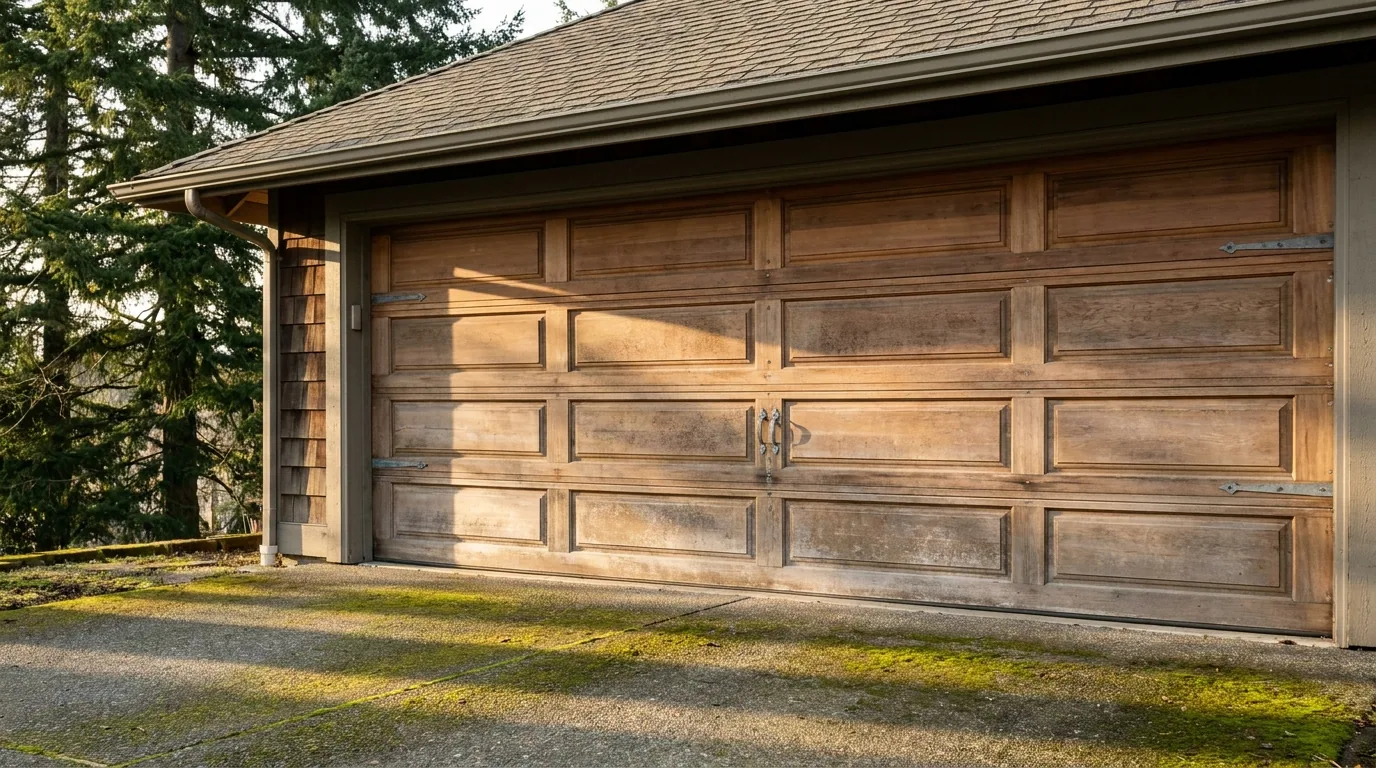
On a steep driveway, the bottom seal meets the floor at an angle. The seal compresses more on the uphill side than the downhill side, and over time it takes a set in that shape. The door closes against an uneven surface, and the opener has to push through the resistance of the seal at the end of the down travel. That is one reason a door on a sloped driveway can sound like it is working harder than the same door on a flat one.
The other change is in how the door hangs when it is fully closed. Gravity pulls the panels slightly toward the low side of the apron. The tracks and hinges carry that load, and the springs carry the weight of the door. Neither is designed to correct for a floor that is out of level, so the hardware absorbs the difference over years of cycles.
Why the opener strains
An opener is not meant to lift the door. It is meant to guide a door that the springs have already balanced. When the opener sounds like it is straining, the useful question is whether the springs are still doing their share, or whether the opener is being asked to make up the difference.
A few things can make the opener work harder on a sloped driveway:
- A bottom seal that is dragging. The seal compresses unevenly against the slope, and the opener pushes through that resistance at the end of the down travel.
- A door that has drifted out of balance. If the springs have lost tension, the opener lifts weight it was never meant to lift. The door will feel heavier in normal use, and the opener will sound labored at the start of a cycle.
- A travel limit set for a flat floor. The opener's down limit may be set so the door presses hard into the high side of the apron to reach the low side.
- A worn drive gear or worn rollers. These add resistance regardless of slope, but the slope makes the symptom more noticeable.
If the motor runs but the door does not move, a stripped opener gear is one certain cause. If the opener strains but still moves the door, the cause is not certain from sound alone. A technician can separate a spring problem from a limit setting from a worn drive component by checking the door's balance and the opener's force settings.
Why the springs wear unevenly
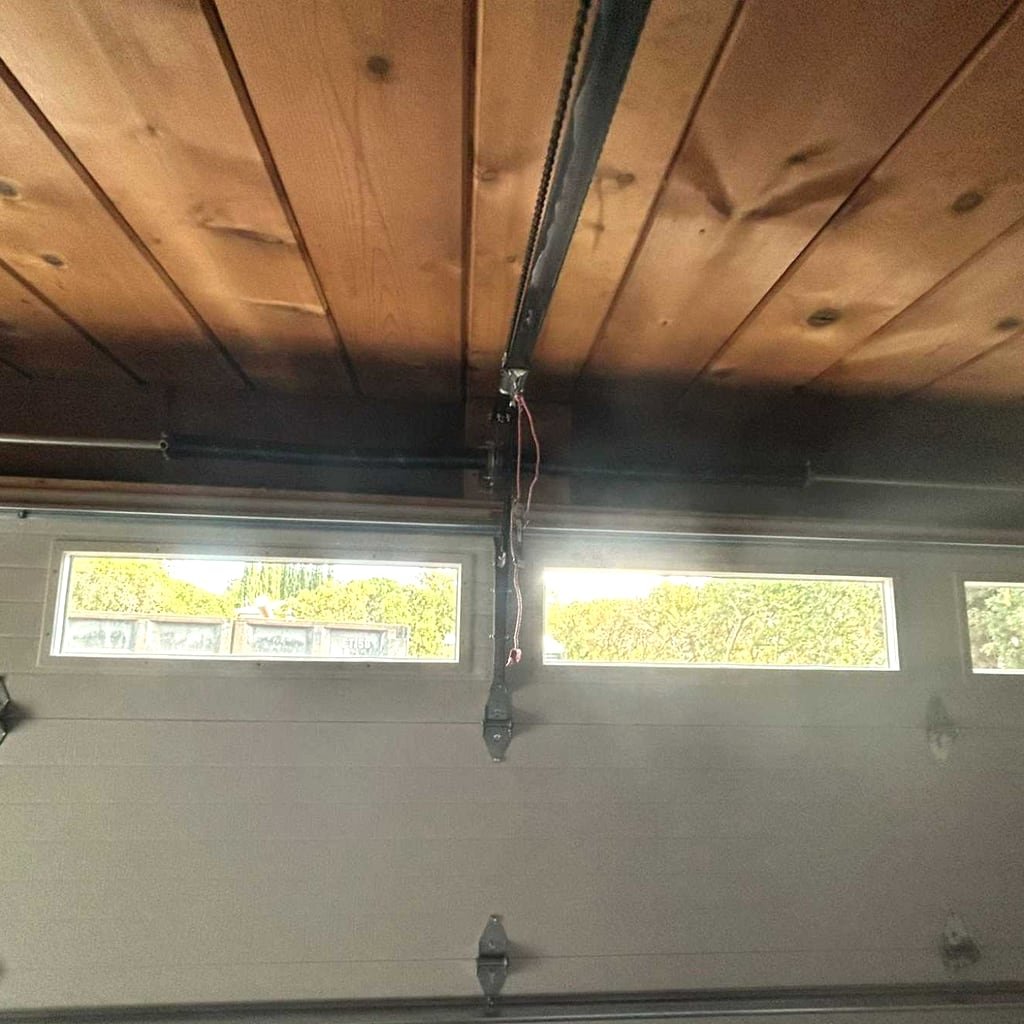
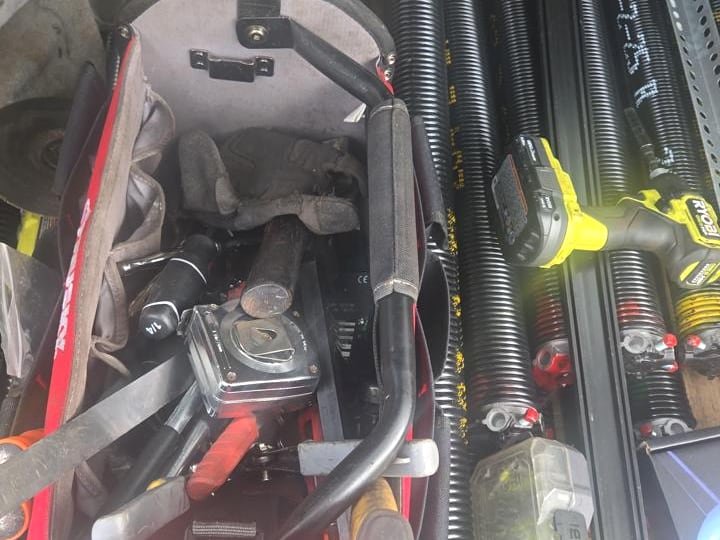
A torsion spring system is usually two springs on a single shaft, one on each side. They are wound to share the door's weight. On a sloped driveway, the door does not hang perfectly level when closed, and the load shifts slightly toward the low side. Over thousands of cycles, one spring can carry more of the work than the other.
Uneven spring wear shows up in ways you can notice without touching the springs. The door may sit crooked when closed, with a visible gap along the top on one side. It may feel heavier in normal use. It may make a new noise at the start of a cycle. None of these tells you which spring is worn, and none of them is safe to investigate by hand. The technician inspects the springs and cables, checks the door's balance, and determines whether one spring has lost tension or whether the door has drifted out of level for another reason.
A broken torsion spring is different. A spring that has snapped cannot hold the door's weight, and the door will not stay up on its own. That is a certain cause and a call for service, not a diagnosis to work through at home.
What you can check from outside the door
With the garage empty and the door closed, a few things are visible and safe to note:
- Whether the door sits level across the opening, or whether one side is lower than the other.
- Whether there is a gap along the top of the door on one side.
- Whether the bottom seal is compressed more on one side than the other.
- Whether the door sounds different at the start of a cycle than it did a few months ago.
These observations are useful to a technician because they narrow the list of suspects. They do not replace a balance check, which involves moving the door by hand with the opener disengaged, and that is technician work. The same goes for the springs, the cables, and the opener drive train. Do not adjust them, and do not pull the emergency release to test the door yourself.
When to call
Call for service if the door sits visibly crooked, if it feels heavier in normal use, if the opener runs without moving the door, or if you hear a new noise at the start of a cycle that does not go away. A tune-up and safety inspection is also the right time to have a sloped-driveway door checked, because the technician can adjust the travel limits and the bottom seal to the apron, and confirm the springs are sharing the load. Liv Garage Door Repairs & Service works in Federal Way and the surrounding areas, and can be reached at (425) 386-7589 or info@livgaragedoors.com.