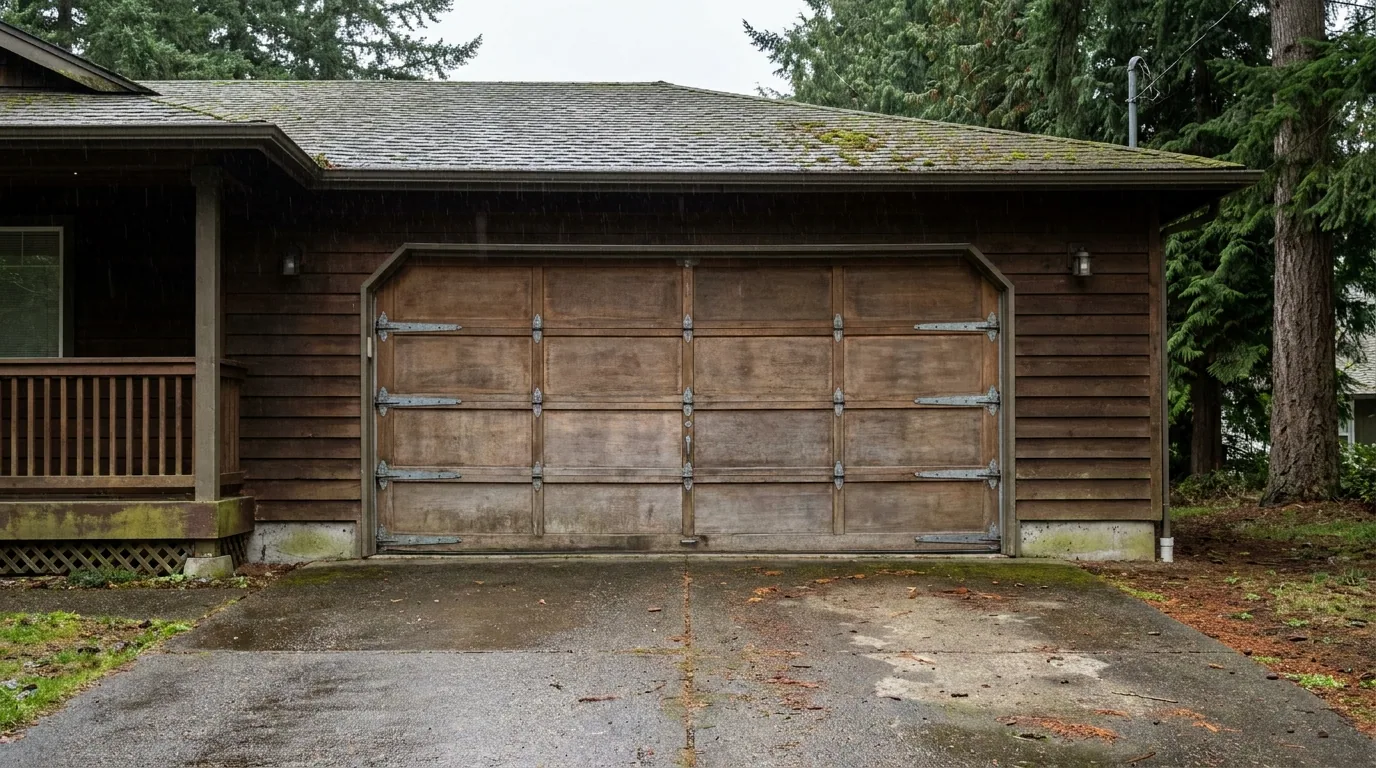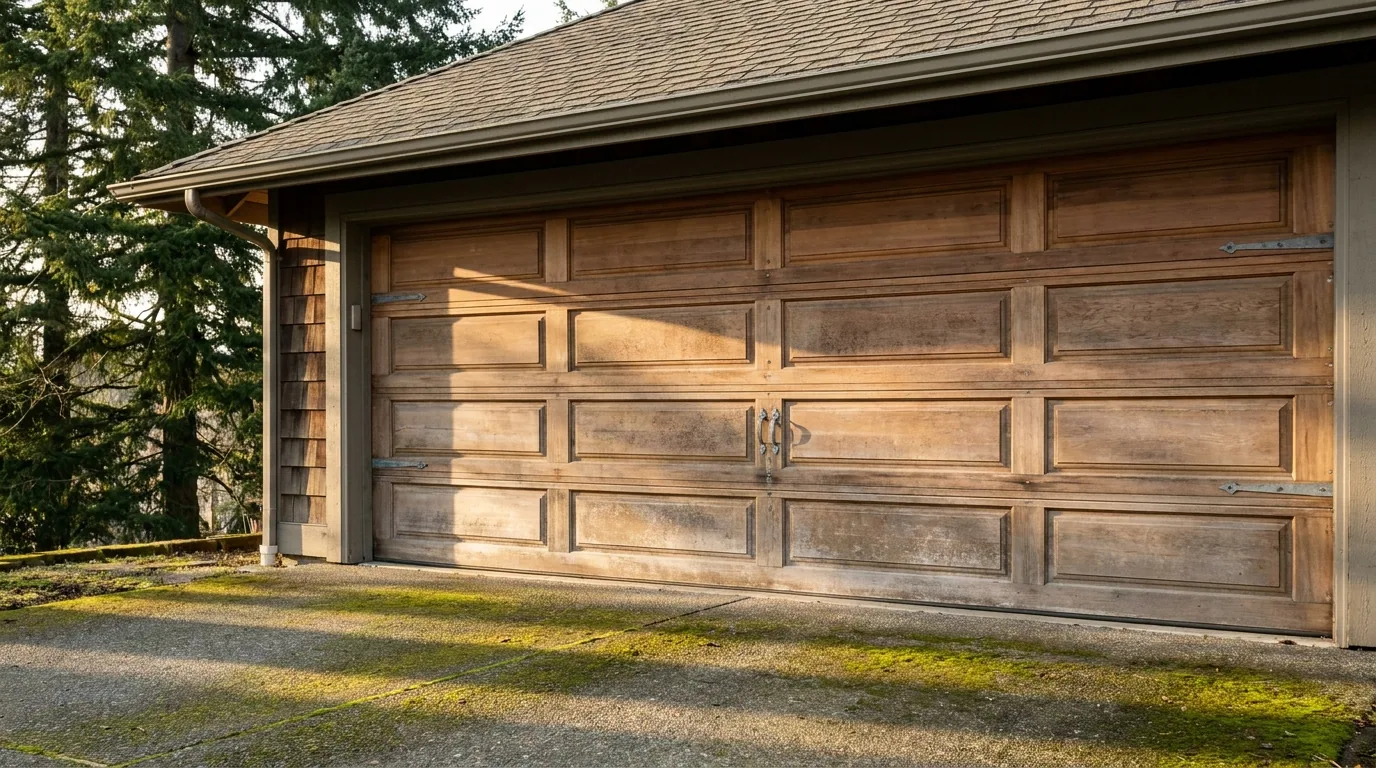
Many driveways around Auburn and the surrounding suburbs are not flat. Some run down to the street, some rise to the garage, and a few are steep enough that you notice the grade every time you walk up them. A garage door does not care about the view, but it does care about the angle it sits at, and so does the opener. The door is a weight hung on a track, and the opener is the motor that moves it. When the driveway falls away from the opening, both of them take on a little more than they were designed for. None of this means a sloped driveway is a defect. It means the door and opener have a harder job than the same equipment on a flat pad, and the wear shows up in particular places.
What the slope actually changes
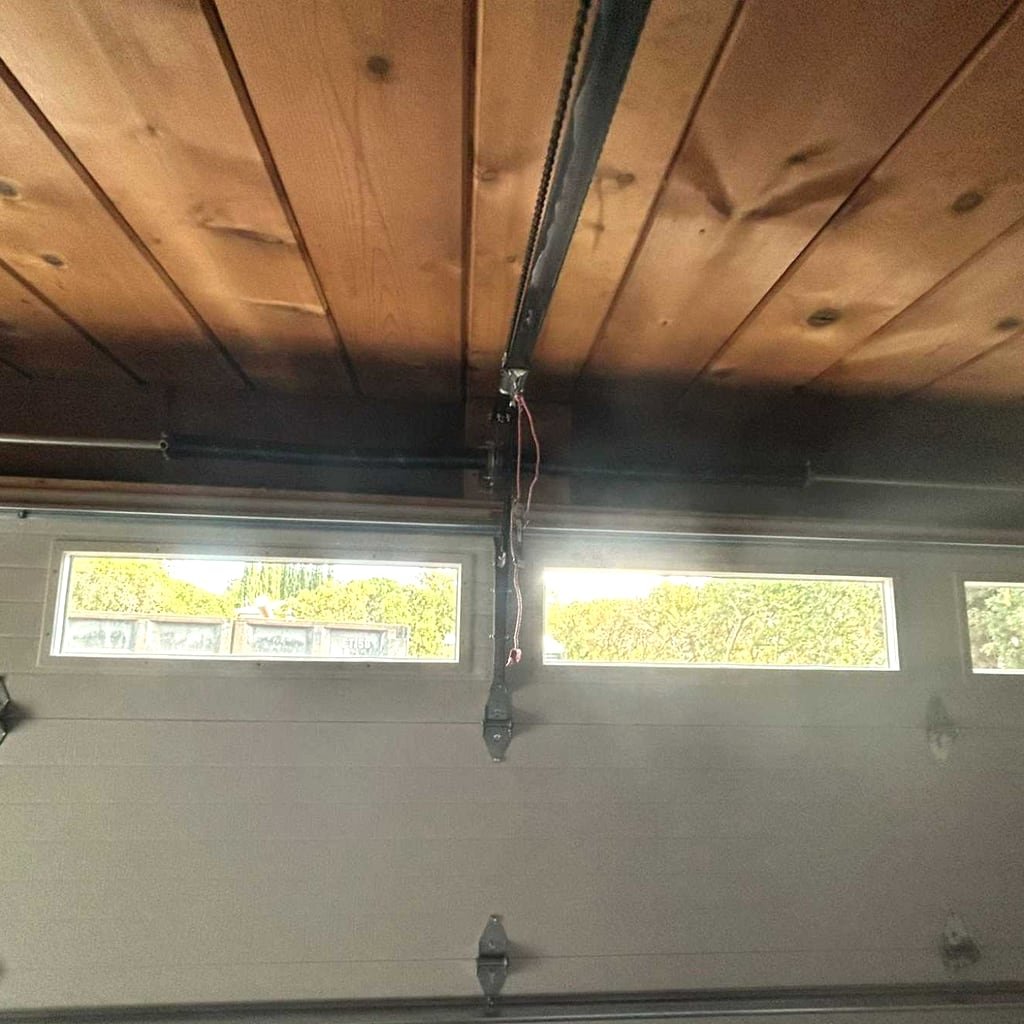
A sectional door runs on vertical tracks up the sides and horizontal tracks back over your head. The opener motor turns a chain or belt or screw, and that drive pushes or pulls the door along the track. On a flat driveway, the door's weight is carried mostly by the torsion spring at the top of the opening, which is wound to match the door's weight and to make it feel light through the whole travel.
A sloped driveway does not change the door's weight, but it does change how the door sits relative to the frame. If the opening is out of level, the door can ride slightly harder against one side of the track, and the rollers on that side do more work. The opener then pulls against that extra drag on every cycle. Over months, that shows up as a motor that sounds strained, a door that moves unevenly, or a drive train that wears faster than it should.
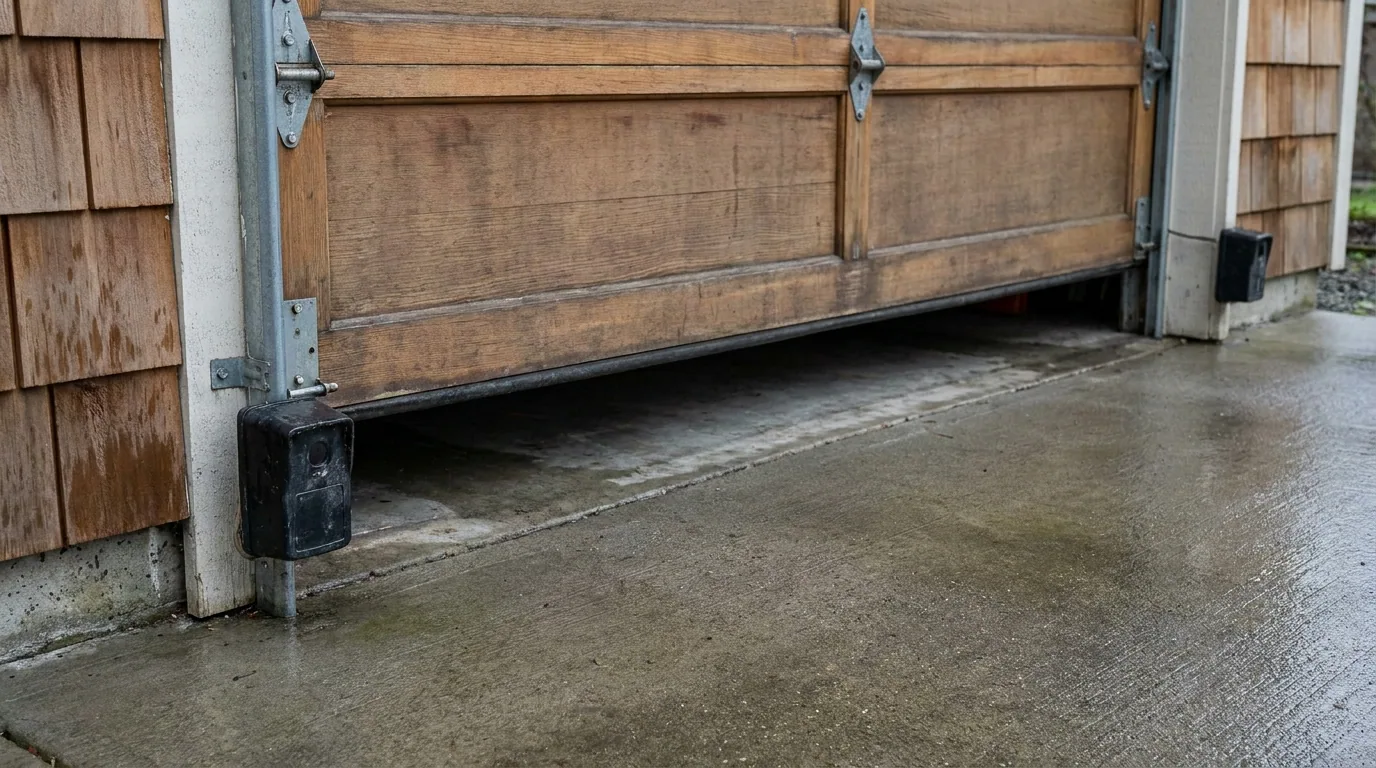
There is a second effect. A door that faces down a slope can let water run toward the opening rather than away from it. The bottom seal and the bottom panel take the worst of that, and a swollen or damaged bottom seal can add drag of its own.
What you may notice from outside the door
You do not need to climb a ladder or touch the hardware to get useful information. With the garage empty and the door closed, stand back and watch a full cycle. Things worth noting:
- The door sits crooked in the opening, with a visible gap along one side or the top.
- The door hesitates or jerks at the same point on each cycle.
- The opener sounds louder or more labored than it used to.
- The door feels heavier in normal use than it once did.
- You hear a new noise at the start of a cycle, or a thump when the door finishes closing.
Any of these can have more than one cause. A door that sits crooked may have a snapped cable, a broken spring, or a bent track, and the technician's inspection is what separates them. A door that feels heavier may have a spring problem, a roller or hinge problem, or a track problem. A new noise may come from a roller, a hinge, or a dry bearing. Those are not things to guess at from the driveway, and they are not things to diagnose by hand.
Why the opener takes the strain
The opener is built to move a door that is already balanced by its springs. When the door drags because the track is out of line, or the springs are not carrying their share, the opener makes up the difference. That is the extra work a sloped driveway can create: not because the slope itself is heavy, but because the door is not running as freely as it should, and the motor is doing the compensating.
A stripped opener gear is one result. When the motor runs and the door does not move, a stripped gear is a common explanation, but it is not the only one. The drive may be disconnected, the door may be locked, or the travel settings may be wrong. The technician checks the drive train and the door together to tell which it is.
The springs are the other place the strain lands. A torsion spring that is carrying more than its share, because the door is binding on one side, works harder on every cycle. A broken spring cannot hold the door's weight, and the door will not stay up on its own. That is a repair for a technician, not a homeowner job. Torsion springs, cables, and the opener drive train all store or transmit force, and they belong to someone trained to work on them.
What a tune-up covers on a sloped driveway
A tune-up and safety inspection is the practical answer to a sloped driveway. The technician checks the track for alignment and level, adjusts the rollers and hinges, checks the springs and cables, and confirms the opener's travel and force settings match the door. The bottom seal is checked at the same time, since a sloped apron often sends water toward the opening.
If you are in Auburn, Kent, Federal Way, Renton, or any of the surrounding areas and your door has started to sound strained, the useful next step is a service call rather than a guess. Liv Garage Door Repairs & Service is reachable at (425) 386-7589 or info@livgaragedoors.com, and the shop is at 5548 34th St SE, Auburn, WA 98092. Hours are Monday through Saturday, 7:00 AM to 8:00 PM, with emergency dispatch available around the clock and Sunday emergency service only. The company is a registered Washington State contractor.