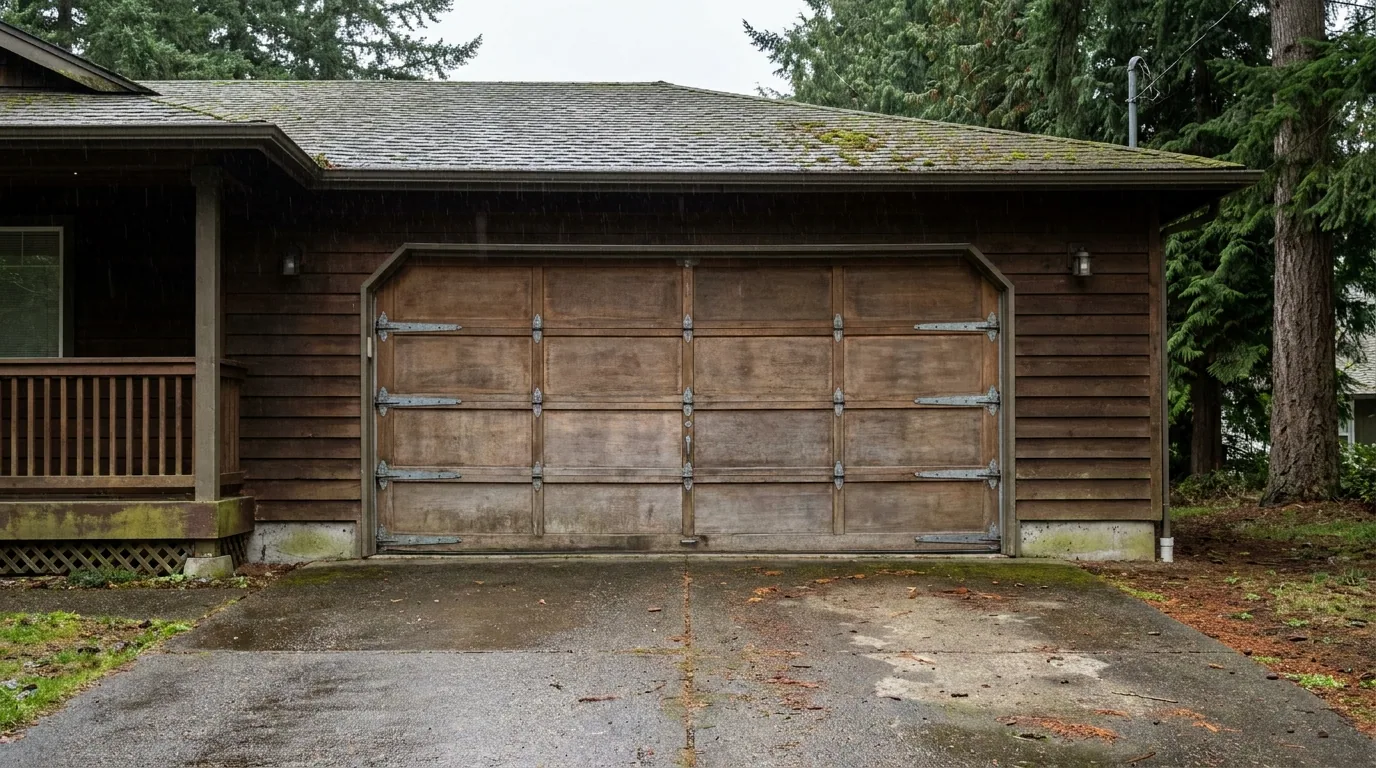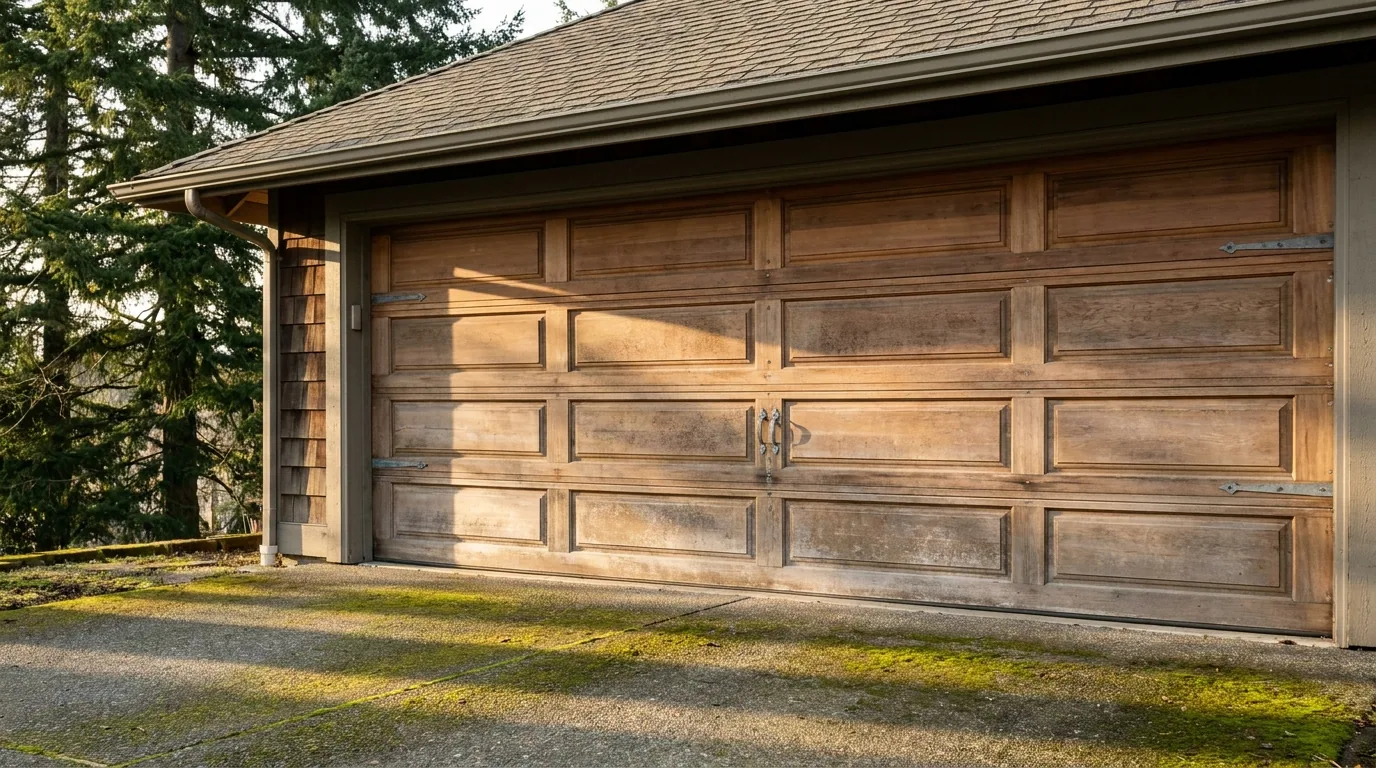
A garage door that opens about a foot and then stops is one of the more common calls we get around Auburn. The symptom is consistent enough that it narrows the field quickly, but it does not point to a single cause. A few different problems produce the same short-travel behavior, and the way to sort them out is to watch what the door and opener do at the moment it stops, then work through the possibilities in order. Some of that you can do yourself. The rest belongs to a technician.
Start by watching, not touching
Before anything else, run the door once and pay attention to the details. Does the motor keep running after the door stops, or does it go quiet at the same time? Does the door stop at the same height every time, or does the stopping point wander? Does the light on the opener blink in a pattern? Is there a new noise right before it stops?
Those observations separate the causes more reliably than anything else. A motor that keeps humming while the door sits still is a different problem from an opener that shuts off cleanly at the one-foot mark. A door that stops at exactly the same spot every cycle points somewhere different than one that quits at random heights.
The opener cuts out: travel limits and force settings
If the motor goes quiet at the same time the door stops, and the door stops at roughly the same height each time, the opener's travel limit or force setting is the first thing a technician checks. Openers are set to stop at a defined point on the up travel, and that setting can drift over time, or be thrown off after a power interruption or a bump to the unit.
The force setting is the other half of this. The opener senses resistance and shuts down if the door is pushing back harder than expected. A door that has started to drag, even slightly, can trip that setting a foot into the cycle. The technician adjusts the limits and force to match the door, and confirms the door is moving freely enough that the setting is not compensating for a mechanical problem.
The motor runs but the door does not move
If you hear the opener running and the door stops or barely creeps while the motor keeps going, the drive train is the place to look. A stripped gear in the opener lets the motor turn without moving the door. A broken or slipping belt or chain does the same. On a screw-drive unit, a worn carriage can produce the same symptom.
This is technician work. The opener housing, the drive train, and the carriage are all parts a homeowner should not open up or adjust. What you can do is note whether the motor sound is normal or strained, and whether the door moved at all before it stopped. That tells the technician which part of the drive to check first.
Something is binding the door
A door that stops a foot up may simply be meeting resistance it cannot overcome. A roller that has seized in its hinge, a hinge that has rusted stiff, a track that has been bent or knocked out of alignment, or a door that is binding in the frame can all produce a short travel before the opener gives up. In this part of Washington, months of damp air rust steel hinges and roller stems, and that is a frequent contributor on older doors.
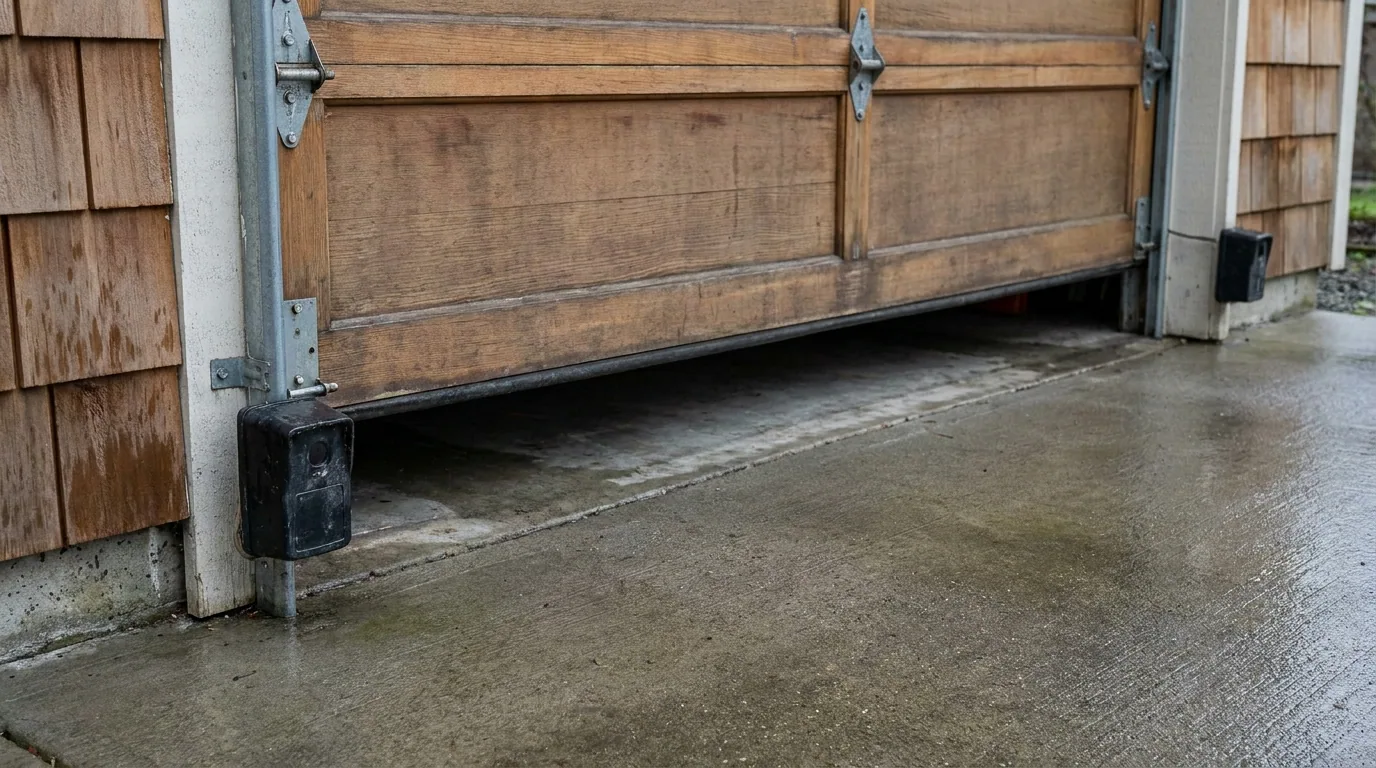
From outside the door, with the garage empty, you can watch for a door that sits crooked, a gap that opens along the top as it rises, or a panel that looks out of line with its neighbor. Any of those point to a mechanical bind rather than an opener setting, and a technician should look at the track, rollers, and hinges directly.
Springs, cables, and the balance of the door
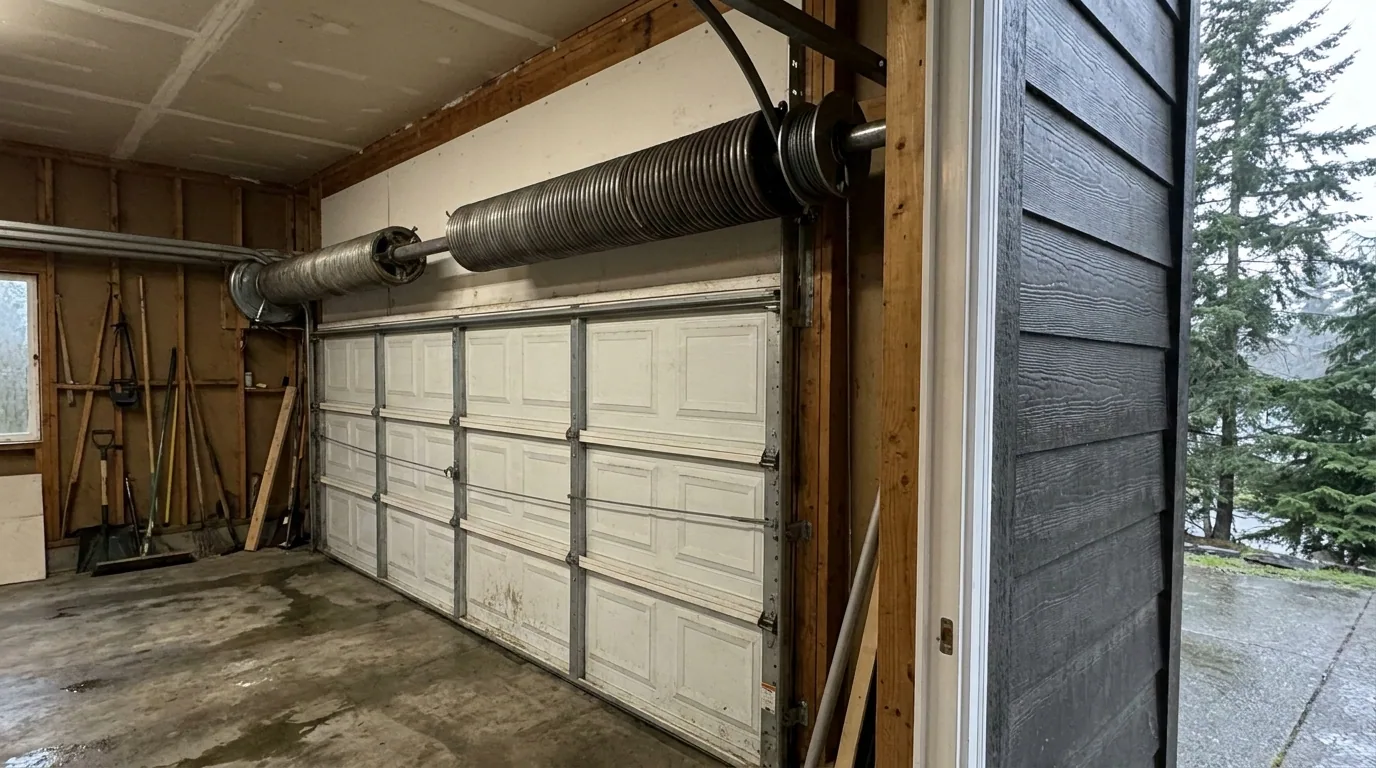
A torsion spring that has broken cannot hold the door's weight, and the door will feel much heavier in normal use. A cable that has snapped lets the door hang at an angle. Either one can stop a door partway up, because the opener is suddenly trying to lift weight the spring was carrying.
Do not inspect the springs or cables yourself, and do not try to lift the door to check its balance. Both are technician work. What you can report is what you notice in normal operation: the door feels heavier than it used to, it hangs unevenly, or it makes a new sound at the start of a cycle. Those observations help the technician decide whether to check the spring system first.
What to do before you call
You can safely do a few things. Confirm the opener is receiving power and that the wall button and any remotes are working. Check that nothing is obstructing the door's path and that the tracks have not been visibly bent by a bump. Note the height at which the door stops, whether the motor keeps running, and whether the behavior is consistent.
Then call a technician for the rest. The travel limits, force settings, drive train, springs, and cables all need hands-on diagnosis, and a door that stops a foot up is often a combination of a small mechanical drag and an opener setting that has reached its limit. Getting both looked at together is what keeps the door running smoothly through the wet months.
If your door is stopping short in Auburn or anywhere in the surrounding area, Liv Garage Door Repairs & Service can take a look. Call (425) 386-7589 or email info@livgaragedoors.com. The team serves Auburn, Kent, Federal Way, Renton, Tacoma, Puyallup, Seattle, Enumclaw, Maple Valley, Covington, Bonney Lake, and Sumner, with weekday hours from 7:00 AM to 8:00 PM, Sunday emergency service only, and 24/7 emergency dispatch.