A garage door that comes down, stops a few inches short, and then travels back up is one of the most common calls a garage door shop gets. It is also one of the most misdiagnosed. Homeowners often assume the safety sensors are at fault, because that is the explanation that circulates online. Sometimes they are right. Often they are not, and replacing a sensor that was never the problem leaves the door doing exactly what it did before. The useful thing to understand is that a door reversing before it reaches the floor is a different symptom from a door that will not start at all, and the two point in different directions.
Separate the two kinds of reversal first
There are two distinct behaviors, and they get lumped together constantly.
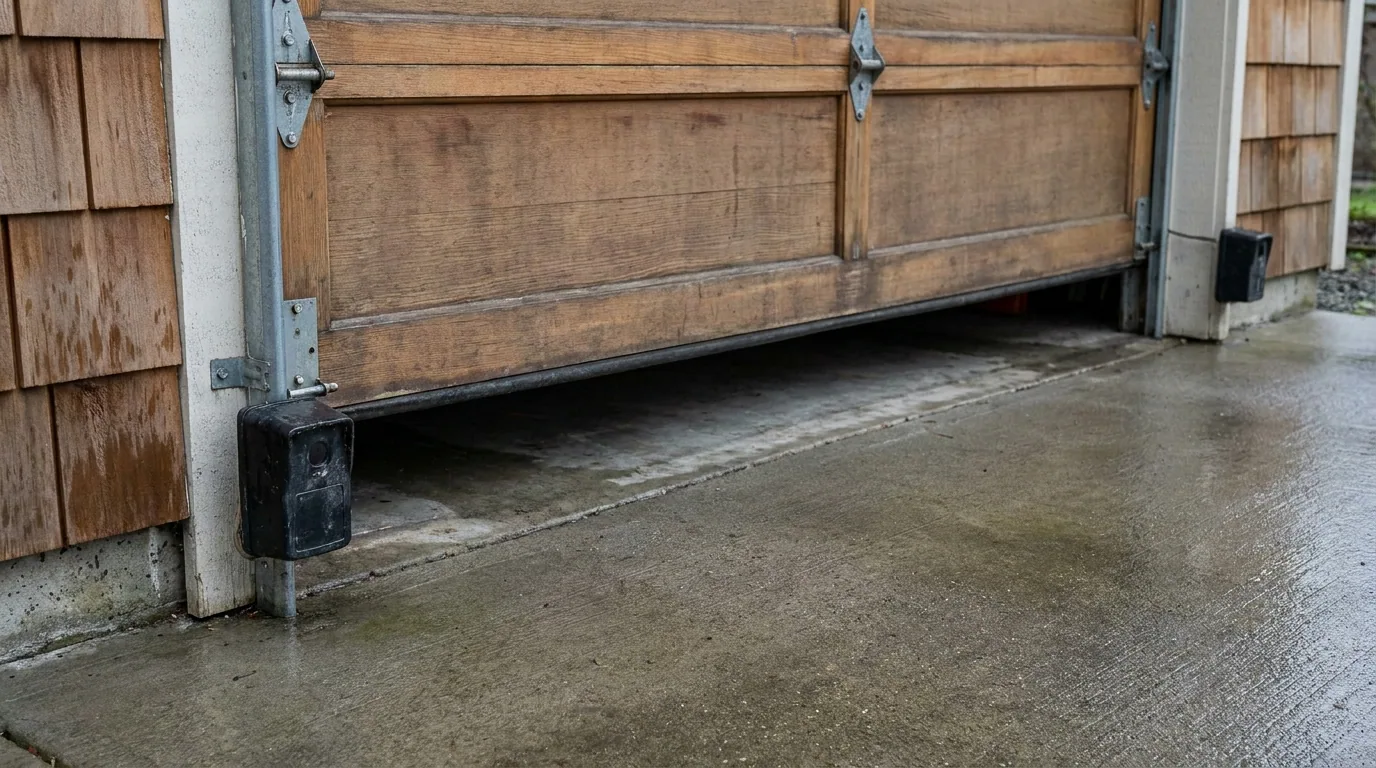
The first is a door that is closing, meets an obstruction or loses its safety beam, and goes back up. That is the photo-eye doing its job. The photo-eye sits near the floor on both sides of the opening and watches for anything breaking the beam while the door travels down. If the beam is blocked, or the two eyes are out of line with each other, the door reverses during the close cycle. This is a safety device on the down travel only. It has no role in a door that will not start, and no role in a door that reverses while it is opening.
The second is a door that reverses before it reaches the floor — it descends most of the way, then turns around. That is a different problem. The opener has force settings that tell it how much resistance to tolerate before it gives up and reverses, and it has limit switches that tell it where the closed position is. If either is out of adjustment, or if the door is dragging enough to trip the force setting, the door will reverse short of the floor even with a clean, unobstructed opening.
What you can check from outside the door
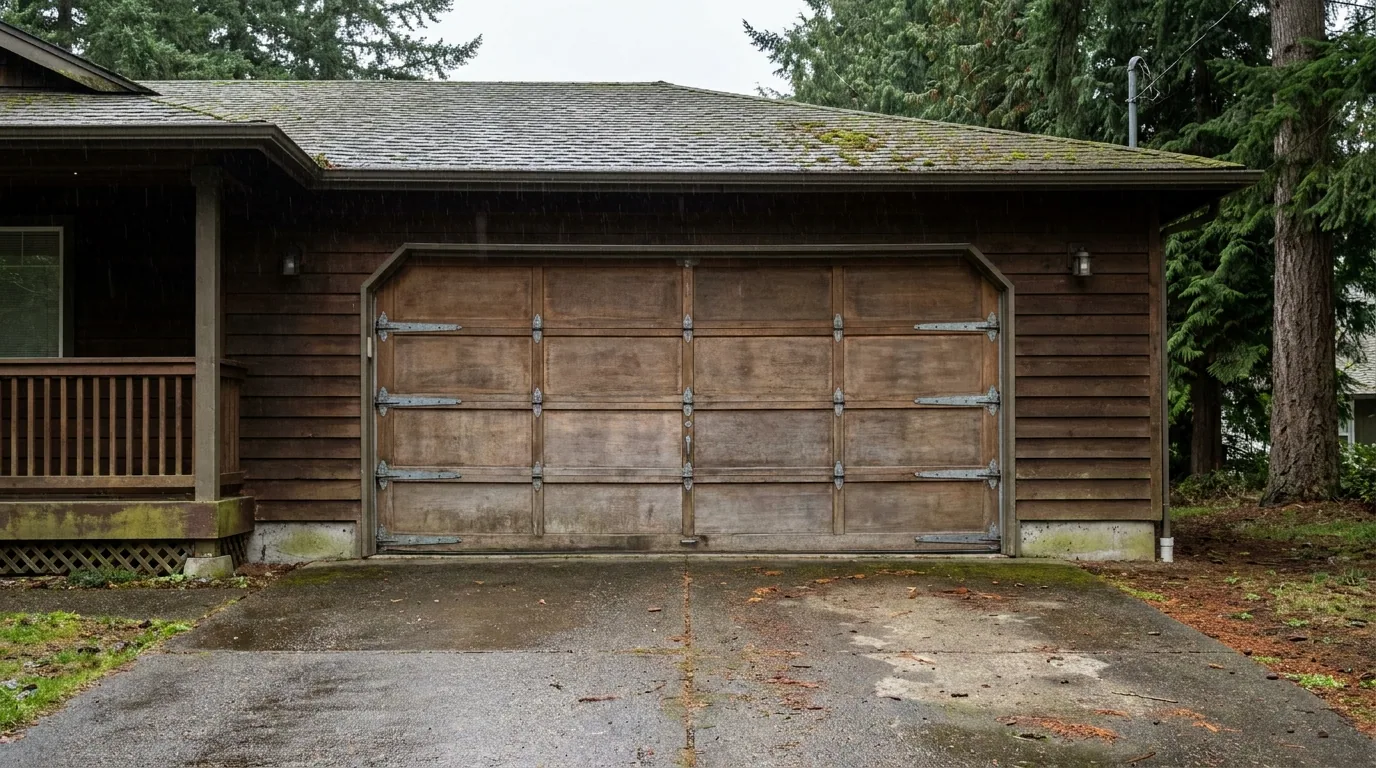
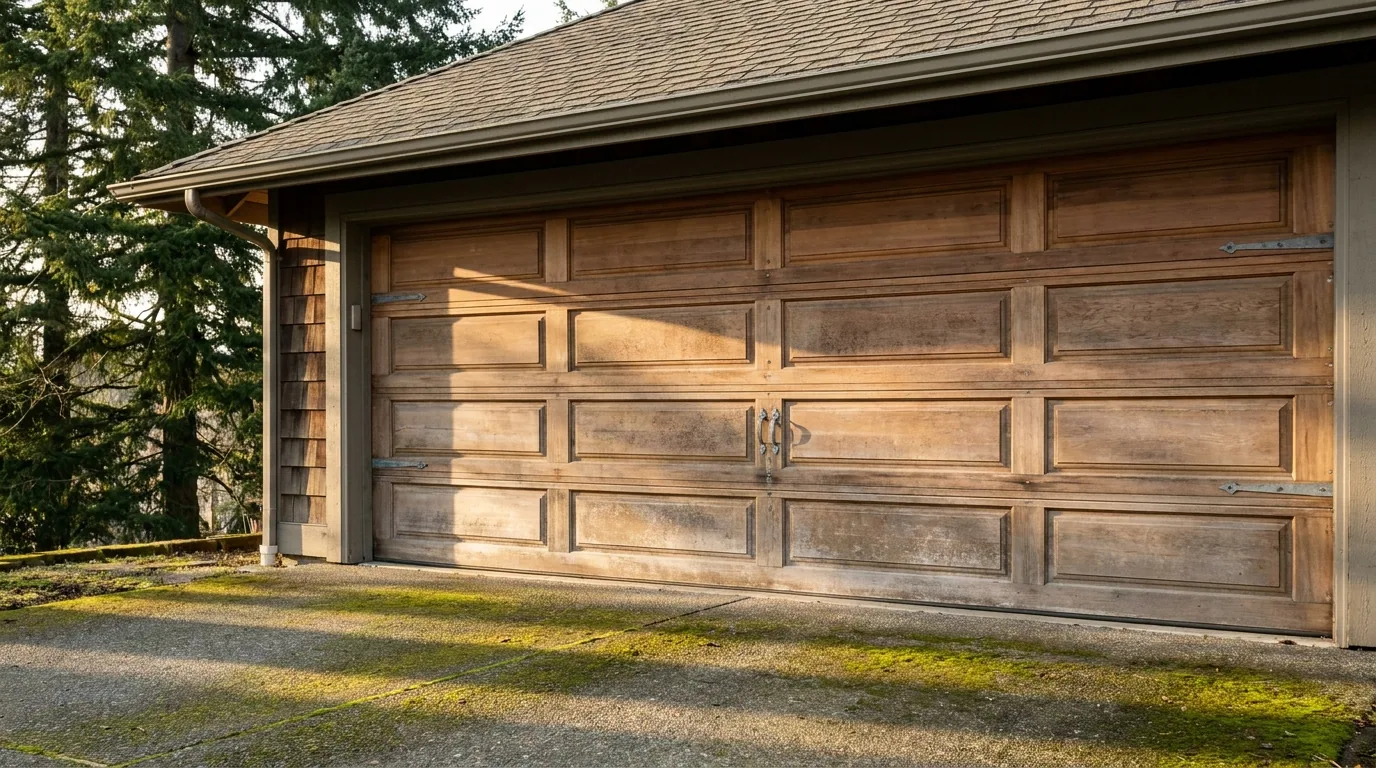
With the garage empty and the door closed, walk the opening and note what you see. A gap along the top of the door, or a door sitting visibly crooked in the frame, points toward the door itself rather than the opener. A door that has been getting noisier at the start of each cycle, or that feels heavier in normal use than it used to, points toward the hardware and the springs carrying the weight. You are reading the door's behavior, not testing its parts.
Clear the area around the photo-eyes. A trash can, a snow shovel, a bag of bark mulch, or a bicycle leaned against the wall can break the beam. So can cobwebs and grit that build up on the lens over a wet winter. Wipe the lenses with a dry cloth and make sure nothing sits in the path. If the door still reverses short of the floor with a clear opening, the photo-eye is no longer the leading suspect.
Also check the obvious: is something on the floor under the door? A door that reverses at the same height every time suggests a travel limit or force setting. A door that reverses at random heights suggests something intermittent in the path or in the hardware.
The causes a technician has to sort out
Once the opening is clear and the photo-eyes are clean, the remaining causes are ones a technician needs to diagnose in person. They include:
- Travel limits set too high. The opener thinks the closed position is higher than the floor. This is an adjustment, not a repair, and it is common after a door has been serviced or after a power interruption resets the opener's memory.
- Force settings too low. The opener is too quick to interpret normal resistance as an obstruction. This can happen gradually as hinges and rollers stiffen with rust, which is a familiar pattern in damp garages.
- Binding hardware. A roller out of its track, a hinge that has seized, or a track knocked slightly out of alignment will make the door drag. The opener reads that drag as an obstruction and reverses.
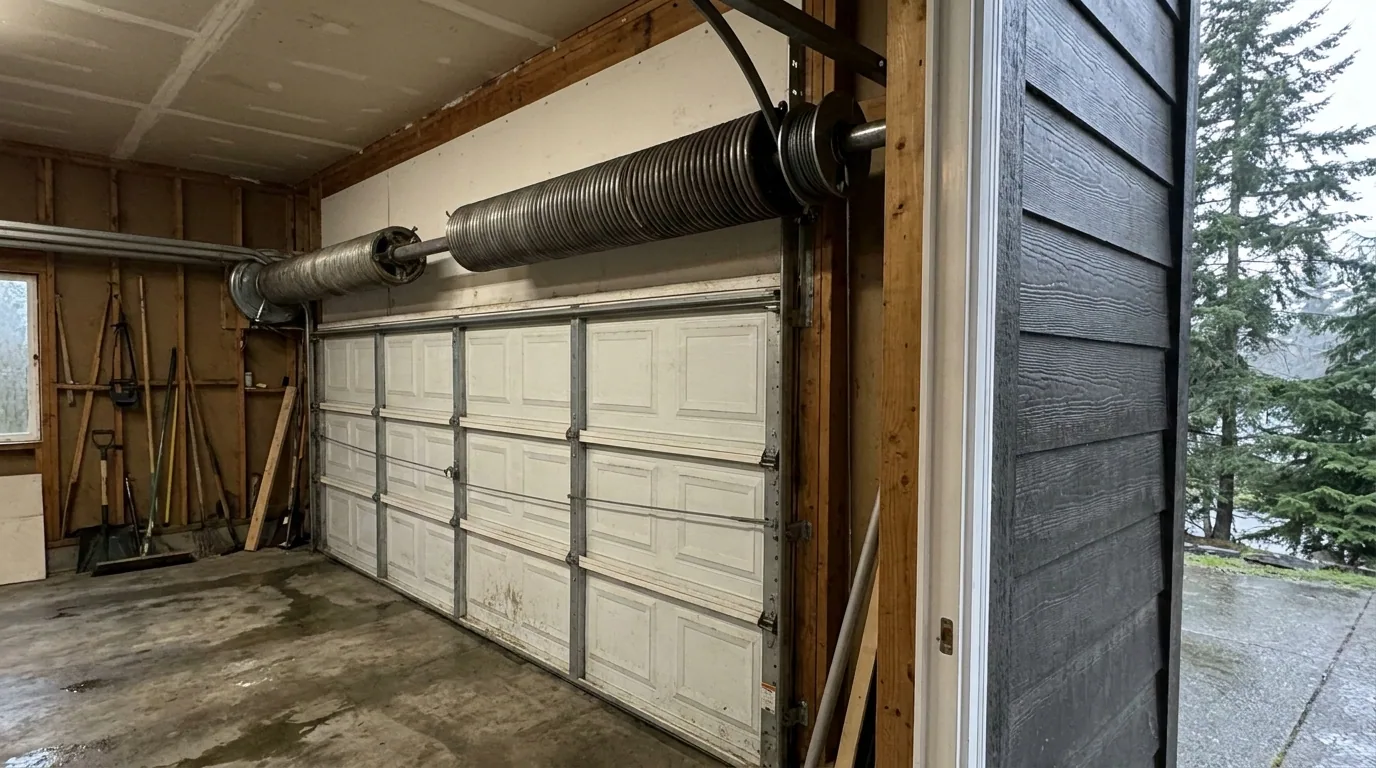
- Springs no longer carrying their share. A torsion spring that has broken, or a spring that has lost tension, leaves the opener lifting and lowering more of the door's weight than it was set up for. The technician inspects the springs and cables directly.
- A door out of balance. A door that is not balanced will fight the opener through part of its travel. Only a technician should test balance, because it involves moving the door by hand with the opener disconnected.
Notice that several of these produce the same symptom, and none of them can be confirmed by watching the door from the driveway. That is why a technician tests rather than guesses.
What not to do
Do not pull the emergency release and move the door by hand to see how it feels. Do not try to adjust the force or travel settings by trial and error. Do not reach for the springs or cables. Torsion springs are under enough tension to cause serious injury, and the cables that run alongside them are under load whenever the door is up. Those are technician work, and the same is true of the opener's drive train.
What you can do is describe the symptom precisely when you call. Does it reverse at the same height every time or at random? Does it happen on the way down only, or also on the way up? Did it start after a power outage, after someone backed into the door, or on its own? Has the door been louder or heavier lately? Those details shorten the diagnosis considerably.
When to call it in
A door that reverses before the floor is a door that will not close, and a garage that will not close is a security and weather problem. Months of rain make an open garage a damp garage, and damp is hard on hinges, rollers, and the bottom seal. It is worth getting the door closing properly rather than leaving it and working around it.
Liv Garage Door Repairs & Service handles residential and commercial garage door repair, spring and cable work, opener repair, and tune-ups and safety inspections across Auburn, Kent, Federal Way, Renton, Tacoma, Puyallup, Seattle, Enumclaw, Maple Valley, Covington, Bonney Lake, and Sumner. Weekday hours are 7:00 AM to 8:00 PM, Monday through Saturday, with Sunday emergency service only and 24/7 emergency dispatch. Reach the shop at (425) 386-7589 or info@livgaragedoors.com, or stop by 5548 34th St SE, Auburn, WA 98092.