A sharp snap from the garage is one of those sounds people remember exactly. It usually comes with no warning, it happens once or twice rather than repeating, and it is loud enough to carry through the wall into the kitchen. By the time you get to the garage, the door may be sitting crooked, may not open at all, or may look completely normal. The sound itself is a useful clue, but it is not a diagnosis on its own. A few different failures produce a snap, and the way to narrow it down is to notice what the door does afterward and what the garage looks like when you walk in. Some of that you can sort out yourself. The rest belongs to a technician.
Start with what the door is doing now
Before anything else, run the door once from the wall button and watch it from inside the garage, standing clear of the moving parts. The important question is whether the door moves normally, moves unevenly, or does not move at all.
A door that sits crooked in the opening, with one side higher than the other, is a different situation from a door that is level but will not budge. A door that opens partway and stops is different again. Each of these narrows the field, and none of them requires you to touch the springs, cables, or the opener drive train.
If the door will not move at all, or moves in a way that looks wrong, stop running it. Repeated cycles on a door with a failed component can do more damage to the panels, the track, and the opener.
The likely candidates behind a single loud snap
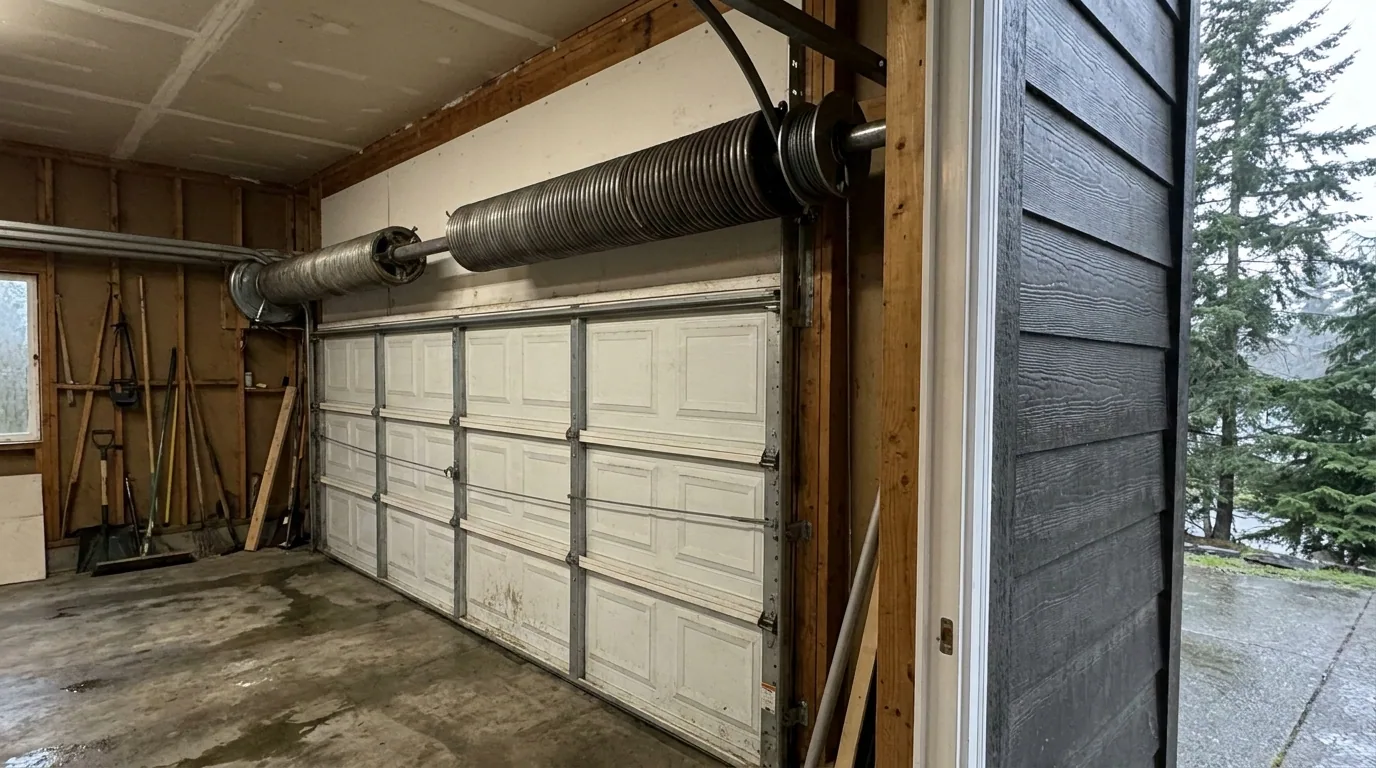
A torsion spring breaking is the most familiar cause, and it is mechanically certain in one respect: a broken torsion spring cannot hold the door's weight. When one lets go, the door becomes very heavy, and if it was up at the time it may drop. The sound is a sharp report, and afterward the door will typically feel much heavier in normal use, or the opener will strain and stop.
A cable can also fail with a snap. When a cable snaps, the door usually hangs at an angle, because one side is no longer being held. This is visible from across the garage without touching anything.
An opener can produce a snap too, though it is often more of a crack or a pop. A stripped opener gear lets the motor run without moving the door, and you may hear the motor humming with the door sitting still. That is a different symptom from a spring or cable failure, and it separates cleanly.
Finally, a roller can jump its track or a hinge can tear loose, and either can make a sharp noise at the moment it lets go. The door may then bind or sit slightly out of line. Because several of these produce a similar sound, the condition of the door afterward is what tells them apart.
What you can safely look at
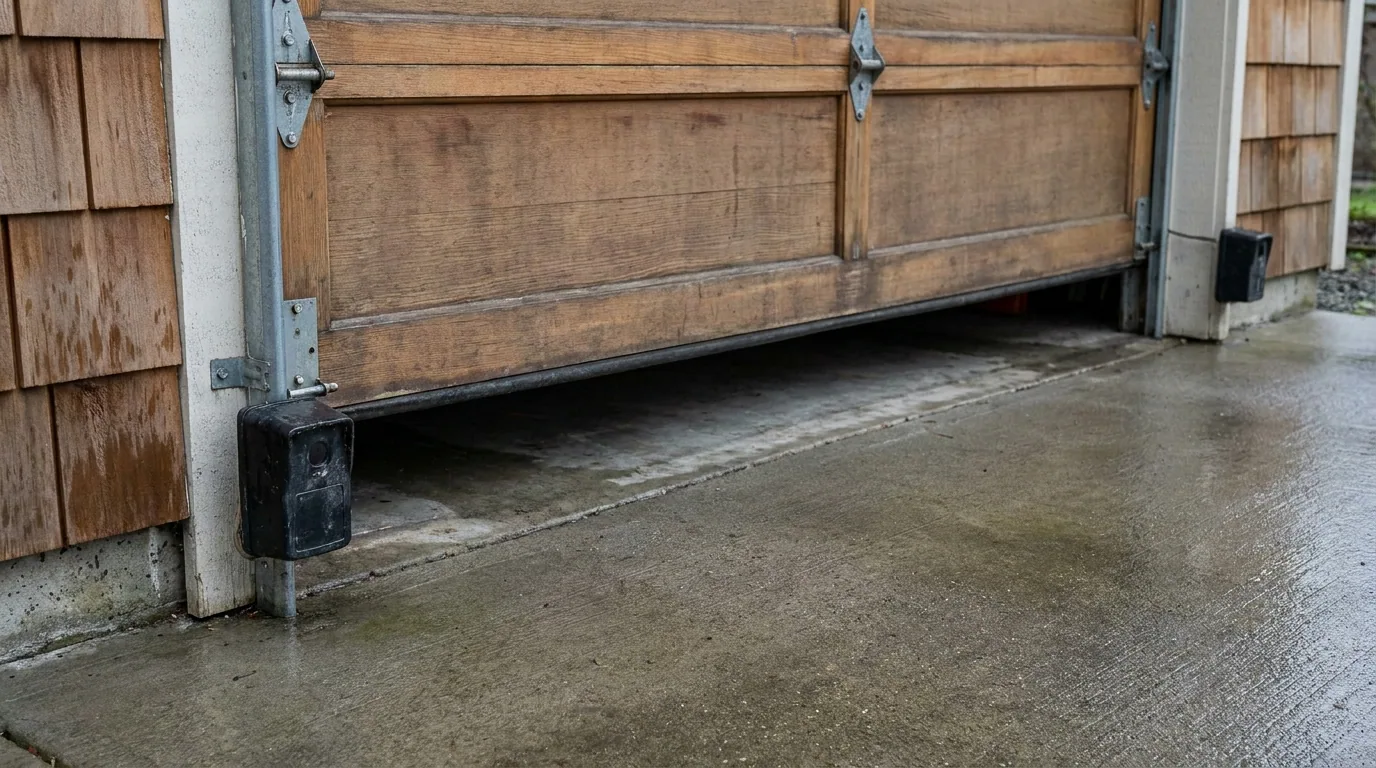
With the garage empty and the door closed, you can look at the door itself. Is it sitting level in the opening, or is one side lower? Is there a gap along the top of the door where there was not one before? Are any panels visibly bent or out of line? Is the bottom seal sitting flat on the floor, or has it pulled away on one side?
You can also listen. Run the opener briefly and note whether the motor runs while the door stays still, whether the door starts and then stalls, or whether it moves but with a new grinding or scraping sound. Those observations are genuinely useful to a technician and cost you nothing.
What you should not do is reach for the springs or cables. Torsion springs are under heavy tension even when the door is down, and a cable under load can release suddenly. Do not try to lift the door by hand to judge its weight, and do not pull the emergency release to move the door manually. Those are technician work, and they are the steps most likely to cause an injury.
Why this happens more often in a damp climate
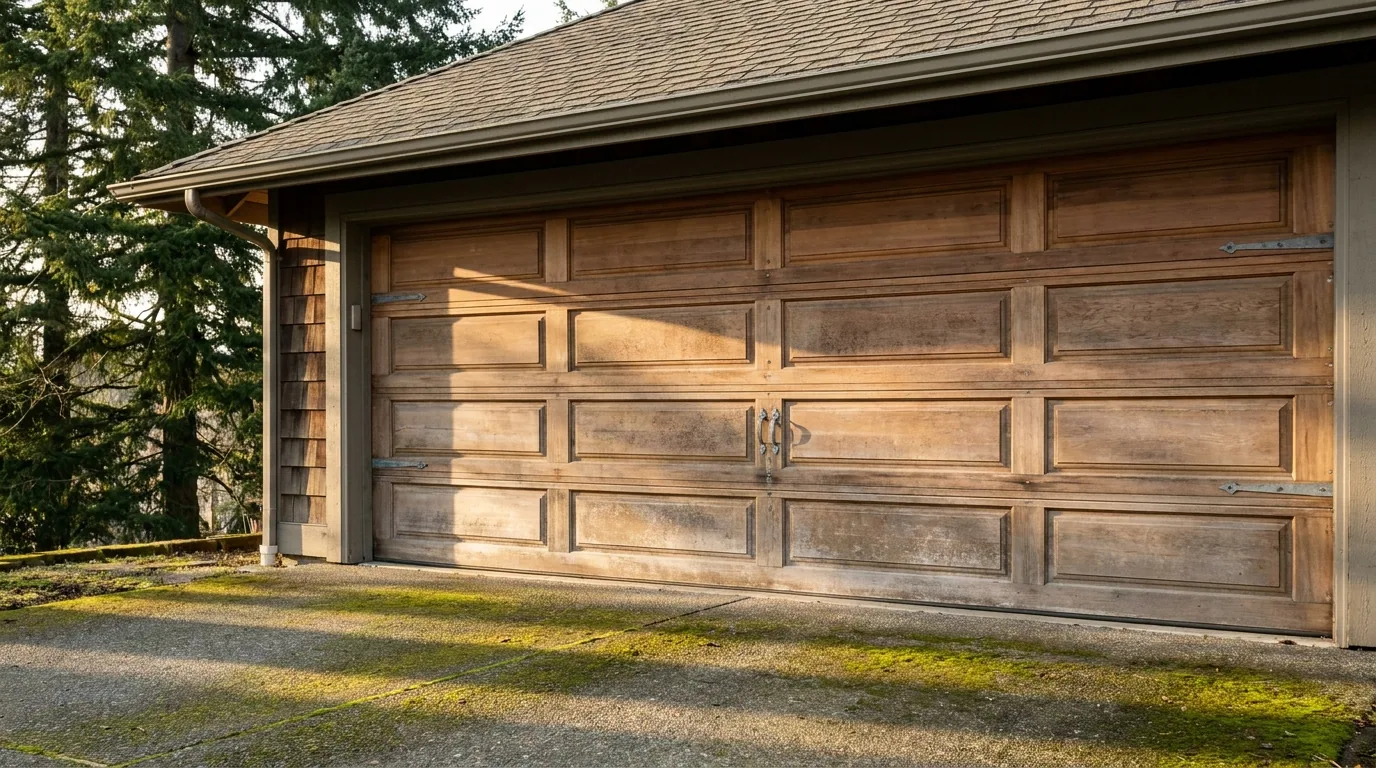
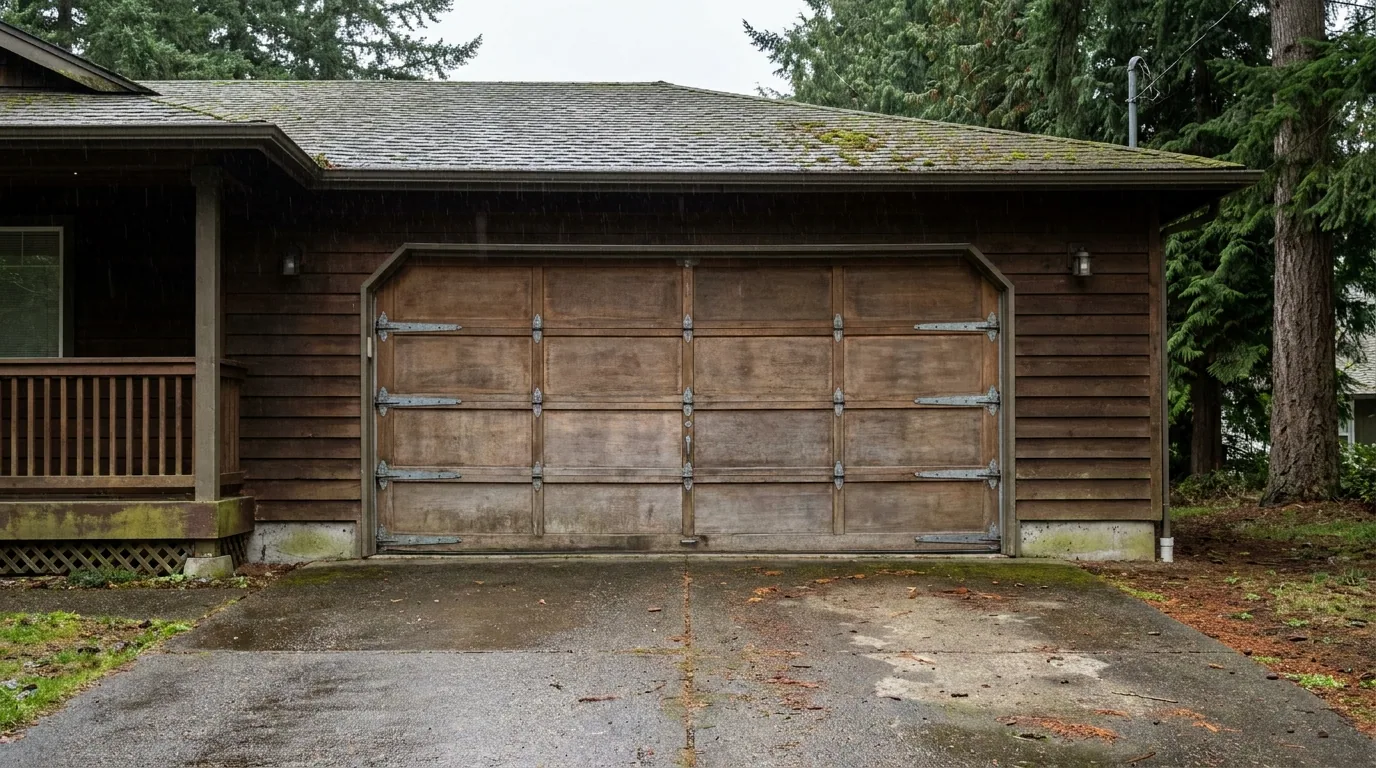
Around Auburn and the surrounding suburbs, months of rain and constant damp take a toll on the hardware before they take a toll on the springs. Steel hinges and rollers rust, and a rusted roller can seize and then tear loose with a snap. Wooden doors swell with moisture, which can bind a panel against the track. Bottom seals harden and pull away. None of this explains every snap, and it is not a substitute for diagnosis, but it does mean the small hardware is worth attention on a regular basis.
Detached garages and low-headroom single-car doors are common here too, and they leave less margin when something goes out of adjustment. A sloped driveway loads the opener and the springs unevenly through the travel, which shows up as extra strain over time.
When to call it in
If the door is crooked, will not move, feels noticeably heavier in normal use, or the opener runs without lifting it, the next step is a technician. Springs, cables, and the opener drive train are not homeowner territory, and a door that has lost one of them is not safe to cycle while you work out which.
Liv Garage Door Repairs & Service covers residential and commercial work across Auburn, Kent, Federal Way, Renton, Tacoma, Puyallup, Seattle, Enumclaw, Maple Valley, Covington, Bonney Lake, and Sumner. The phone number is (425) 386-7589, and the email is info@livgaragedoors.com. Weekday hours are 7:00 AM to 8:00 PM Monday through Saturday, Sunday is emergency service only, and there is 24/7 emergency dispatch. The company is a registered Washington State contractor, based at 5548 34th St SE, Auburn, WA 98092.