If your garage door is original to a 1970s to 2000s tract home in Auburn, Kent, Federal Way, or Renton, you may have noticed rust along the top panel while the rest of the door still looks sound. It is a common pattern on builder-grade sectional doors in this area, and it usually has less to do with the paint than with how that top section is built and what it is exposed to. This article covers why the top panel tends to go first, what you can safely observe with the garage empty and the door closed, and which parts of the job belong to a technician.
What builder-grade means for the top section
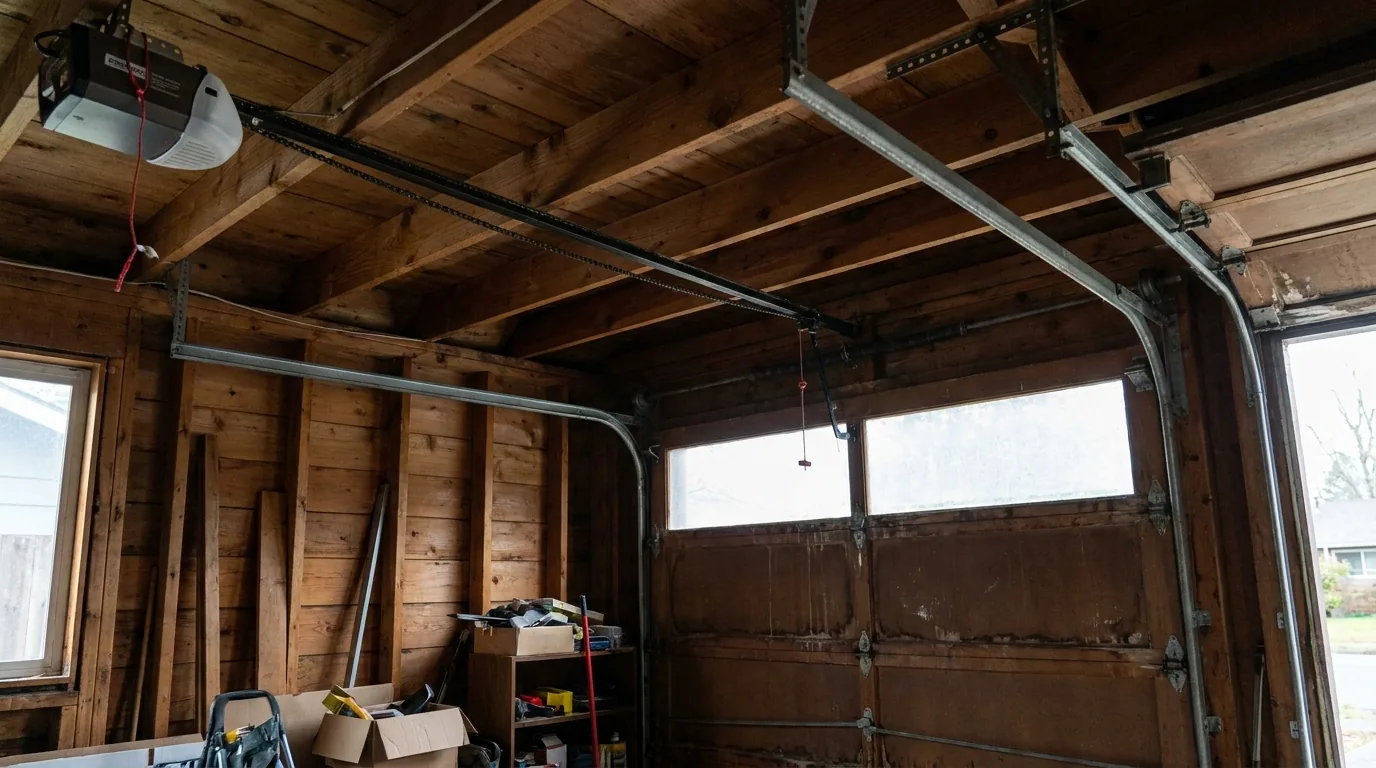
Builder-grade sectional doors are the standard doors installed across most tract housing in the region. They are typically steel, often with a light-gauge skin over a stamped or bonded core, and they are built to a price point. The top panel is usually the shortest section and carries less structural load than the bottom or middle panels. In many doors it also sits closest to the header and the weatherstripping, where water tends to collect. That combination — thin steel, a short panel, and a location that stays wet — is why the top section often shows rust before the rest.
Why the top panel is usually first
Several things work on that top section at once. The panel is often made from lighter steel than the sections below, so it has less material to lose before rust shows through. The paint on a builder-grade door is thin, and the top panel takes the brunt of the weather at the header. Rain running down the door, splash from the driveway, and the steady damp of a western Washington winter all leave water sitting along the top edge.
Hinges and rollers are another factor. The hinges at the top panel are where the door flexes most as it opens and closes, and that movement can work at the paint and the metal around the hinge. Once the coating is breached, the steel behind it is exposed. In a garage that stays damp — which many do here — exposed steel rusts. The top panel is not weaker by design so much as it is exposed in a way the lower panels are not.
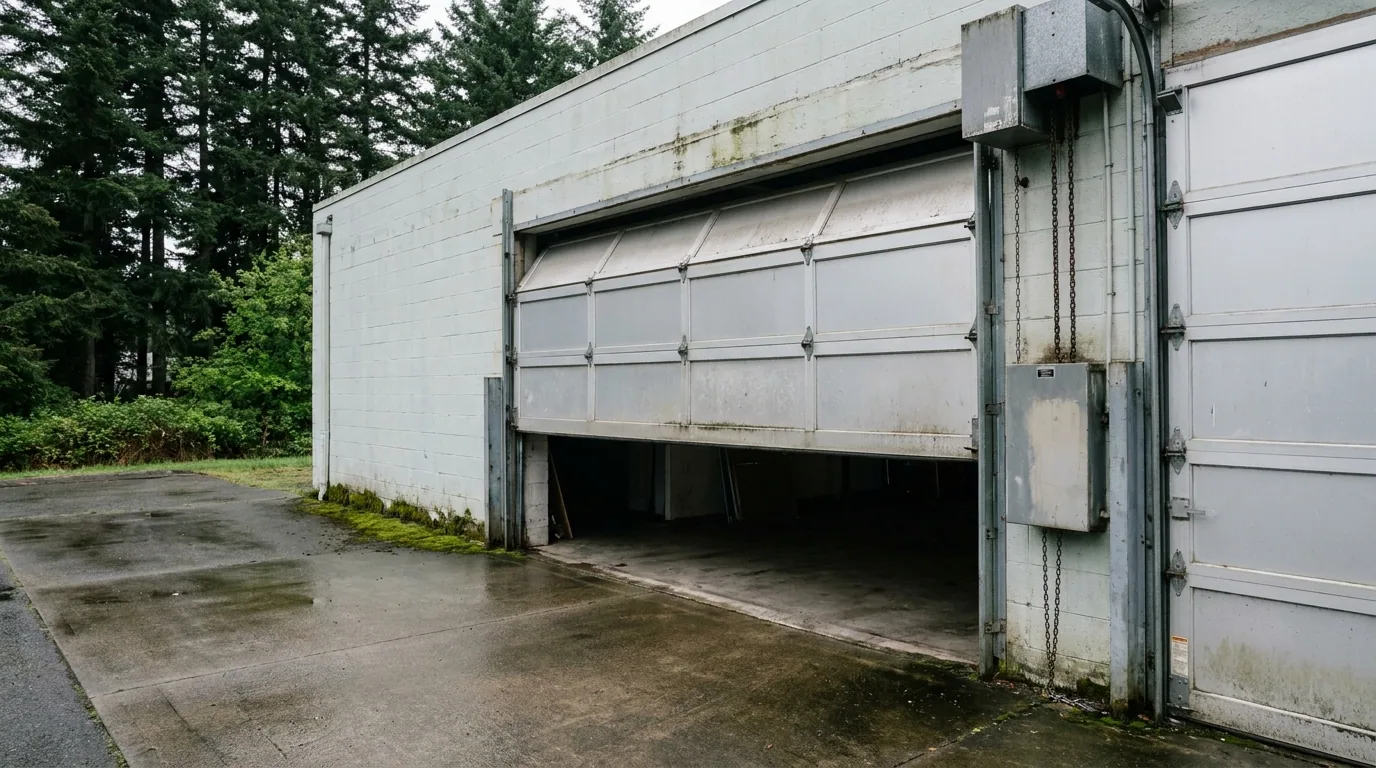
Many garages in this area are detached, and a detached garage is often the least climate-controlled room on the property. The door is a thin steel skin between wet outside air and a concrete slab that holds moisture. The top panel, nearest the header and the weatherstripping, sits in that damp air more than the sections below.
What you can safely observe
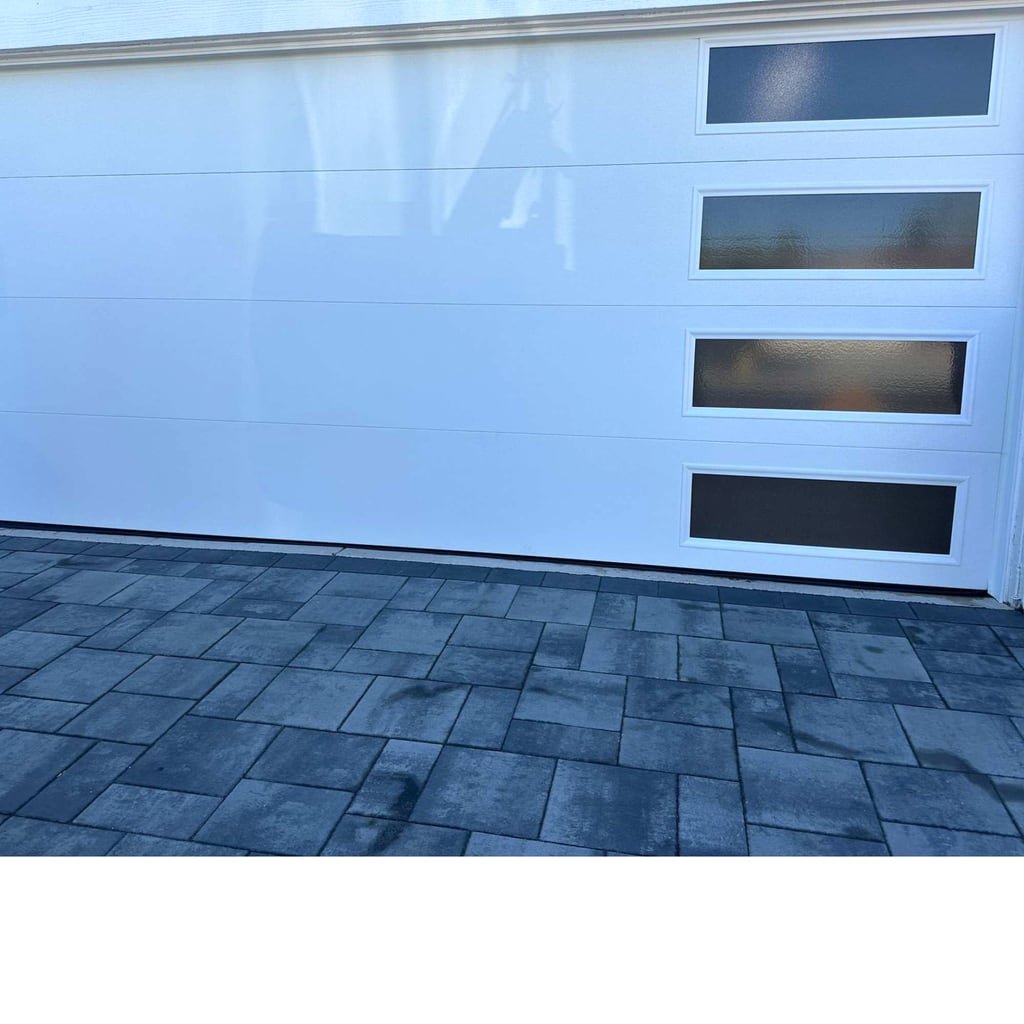
With the garage empty and the door closed, you can look at the door from the driveway without touching any moving parts. What you are looking for is visible rust: brown or orange staining along the top edge of the top panel, or along the seam where the top panel meets the one below. You can also note whether the paint is bubbling or flaking in those areas, and whether the weatherstripping along the top of the opening is torn or pulling away. If the door sits crooked or you notice a gap along the top when it is closed, that is worth mentioning to a technician — it can point to a track or alignment issue rather than rust alone.
What you should not do is probe at the rust with a tool, scrape it, or try to treat it yourself if that means working around the hinges or the door's moving parts. Surface rust on the panel is one thing; rust at the hinges and rollers is another, and it belongs to a technician who can check the hardware safely.
What a technician checks
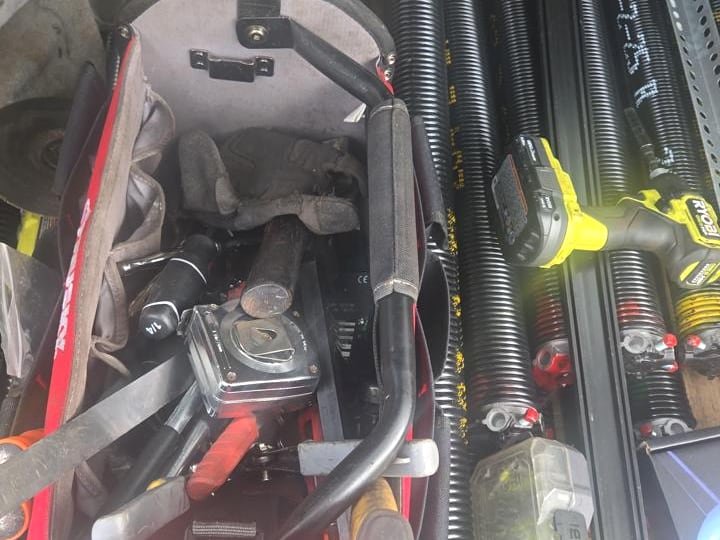
When a technician looks at a rusted top panel, the panel itself is only part of the picture. They will inspect the hinges and rollers at that section, the condition of the weatherstripping at the header, and the track alignment. Rust at a hinge can mean the hinge is seizing, which puts extra load on the door and the opener. Rust along the top edge can mean water is getting behind the weatherstripping. The technician will also check the springs and cables while the door is there, since those are the parts that carry the door's weight and are not something a homeowner should touch.
If the rust is surface-level and the panel is sound, the fix may be cleaning and repainting. If the steel has thinned or the panel is perforated, a panel replacement is the usual route. Either way, the technician will tell you what the rust is and whether it has affected anything beyond the paint.
Keeping the top panel dry
The practical steps are about keeping water off that top section. Keep the weatherstripping along the top of the opening in good condition so rain does not run behind it. Keep the bottom seal intact so water does not wick up from the floor. If your driveway is sloped — common in this region — water can pool near the door, so clearing leaves and debris from the threshold helps. And if you see rust starting, mention it at your next tune-up rather than waiting for it to spread. A tune-up and safety inspection is the right time for a technician to check the hinges, rollers, and weatherstripping that let water in.
If you are in Auburn, Kent, Federal Way, Renton, or anywhere in our service area and want the top panel looked at, call Liv Garage Door Repairs & Service at (425) 386-7589 or email info@livgaragedoors.com. We are open Monday through Saturday, 7:00 AM to 8:00 PM, with 24/7 emergency dispatch and Sunday emergency service only. We are a registered Washington State contractor.