A garage door that will not stay down in a gust is one of the more common calls we get across Auburn and the surrounding suburbs, and it is usually a smaller problem than it sounds. The door itself is heavy, and the opener is built to hold it. What gives way in wind is the seal at the floor and the weatherstripping around the opening. Once that seal stops meeting the concrete evenly, a gust can get under the bottom section and work the door like a sail. This article covers what the bottom seal and weatherstripping actually do, what you can safely observe from the driveway with the garage empty, and which parts of the job belong to a technician.
What the bottom seal and weatherstripping are for
A sectional garage door does not sit metal-to-concrete. The bottom section carries a flexible seal, usually a rubber or vinyl strip that slides into a channel or fastens to the bottom edge of the panel. When the door closes, that strip compresses against the floor and closes the gap. The weatherstripping around the sides and across the top of the opening does the same job against the jambs and the header.
Those two pieces do more than keep rain and leaves out. They close the opening against moving air. Without a seal that meets the floor along its whole width, wind finds the gap, gets under the bottom panel, and pushes upward. The door may lift slightly, rattle in the tracks, or cycle back up after it has closed. In a wet climate, the same seals are also the parts that take the most abuse: they sit against damp concrete, they flex every time the door moves, and they age faster than most of the hardware above them.
What you can check safely from outside the door
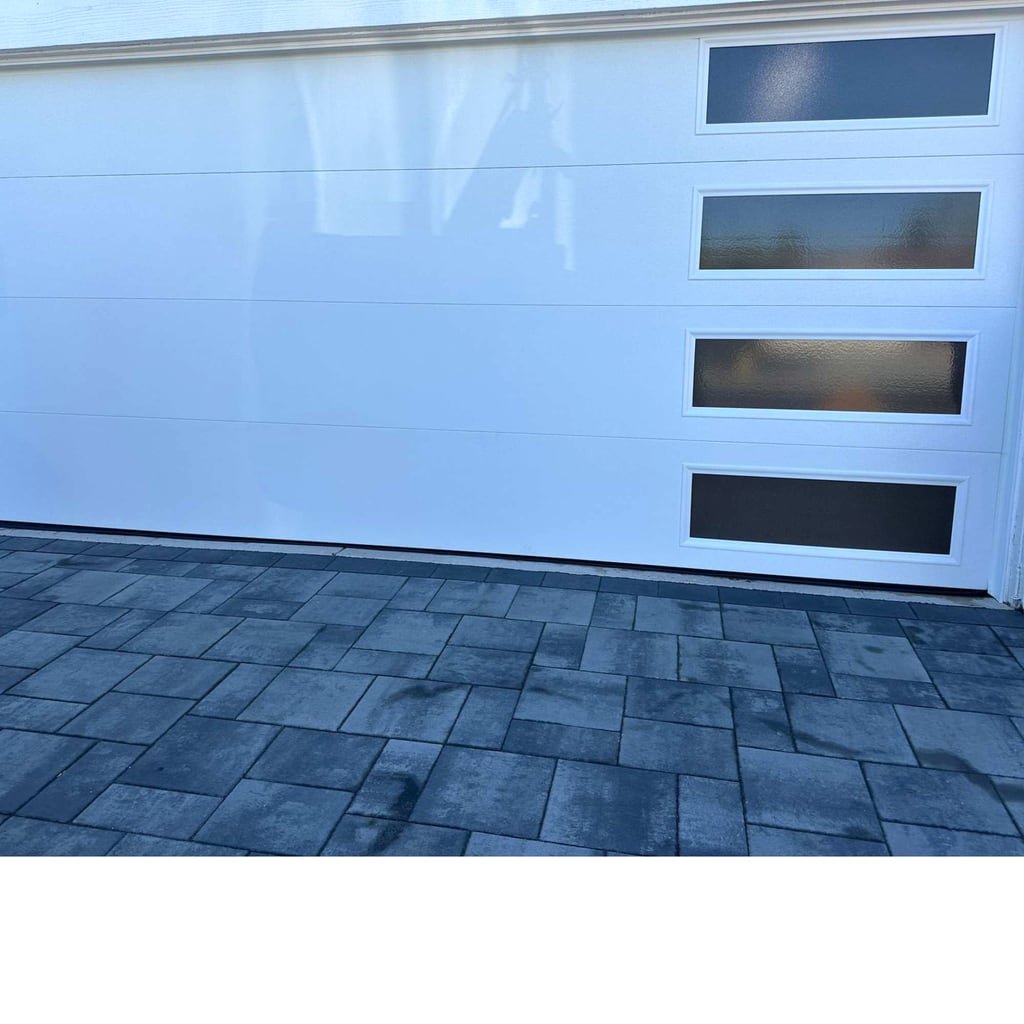
With the car out of the garage and the door closed, stand in the driveway and look along the bottom edge. You are not touching anything, just observing.
- A visible gap along the floor. Daylight under the bottom section, or a strip of light in one corner where the concrete has settled, means the seal is not meeting the floor. That gap is where wind gets in.
- The door sitting crooked. If one end of the bottom edge is closer to the floor than the other, the seal cannot compress evenly. Note it, but do not try to correct it yourself; a crooked door has several possible causes and a technician has to sort out which one applies.
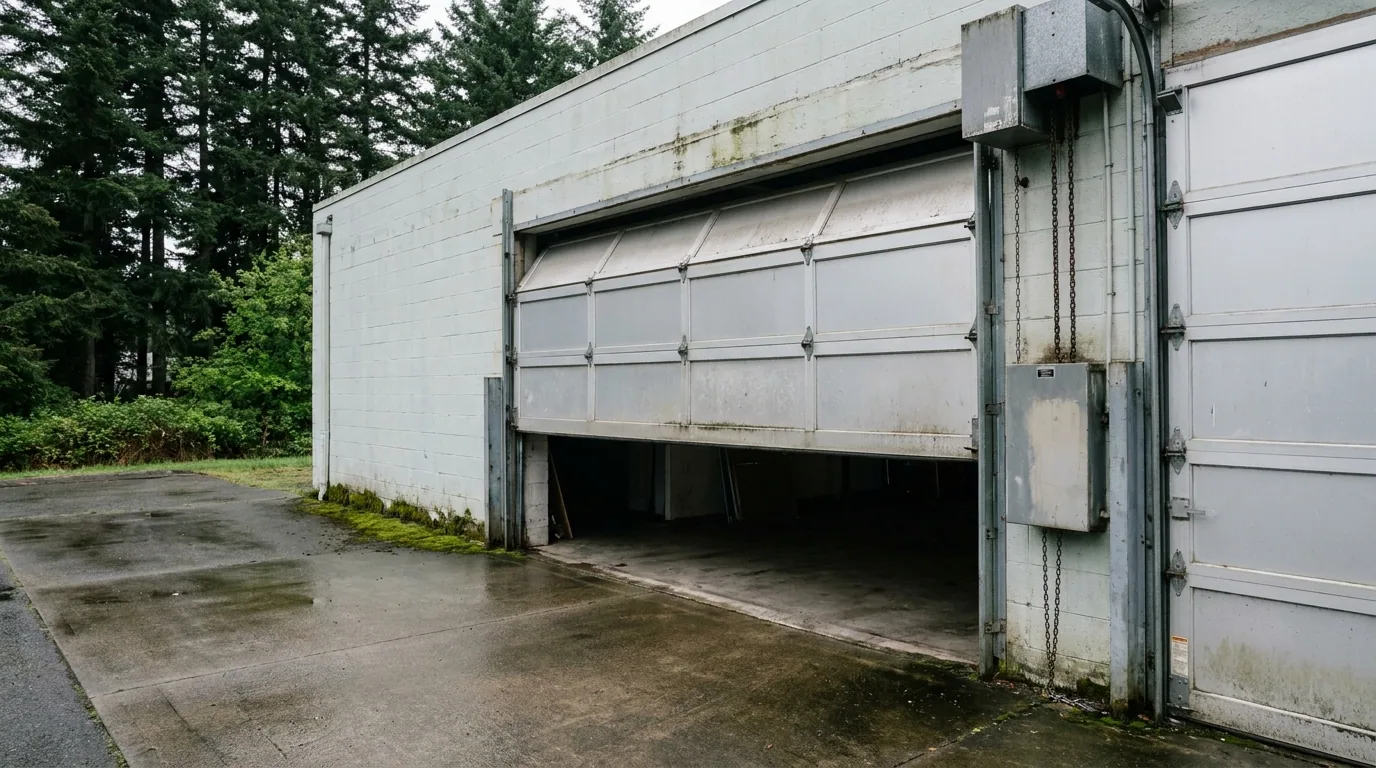
- Torn, flattened, or missing seal. A bottom strip that has gone hard, cracked, or pulled out of its channel will not close a gap no matter how well the door is adjusted.
- Weatherstripping that has pulled away. Look at the sides and top of the opening for strips that have come loose, sagged, or worn through at the corners.
If the door lifts or reverses on its own in a gust, stop using it until it has been checked. A door that is being pushed off its normal travel can come out of the tracks.
Why the problem shows up on windy days and not otherwise
A seal that is merely tired will often pass a calm-day test. The door closes, it looks fine, and nothing seems wrong. Wind changes the pressure on both faces of the door, and once there is a gap at the floor or along a jamb, that pressure difference has somewhere to go. The door behaves like a loose window sash: it rattles, it lifts slightly, and the opener may sense the movement and reverse the door.
This is also why the problem tends to get worse over a season rather than appear overnight. Seals flatten and harden with age, and concrete aprons settle. A gap that was barely noticeable in spring can be obvious by the time the fall winds arrive, even though nothing about the door was changed on purpose.
When the seal is not the whole story
Replacing a worn bottom seal or loose weatherstripping is routine work, and it solves a lot of wind complaints. But a door that will not stay down can have other causes, and it is worth knowing that before you assume the seal is the only issue.
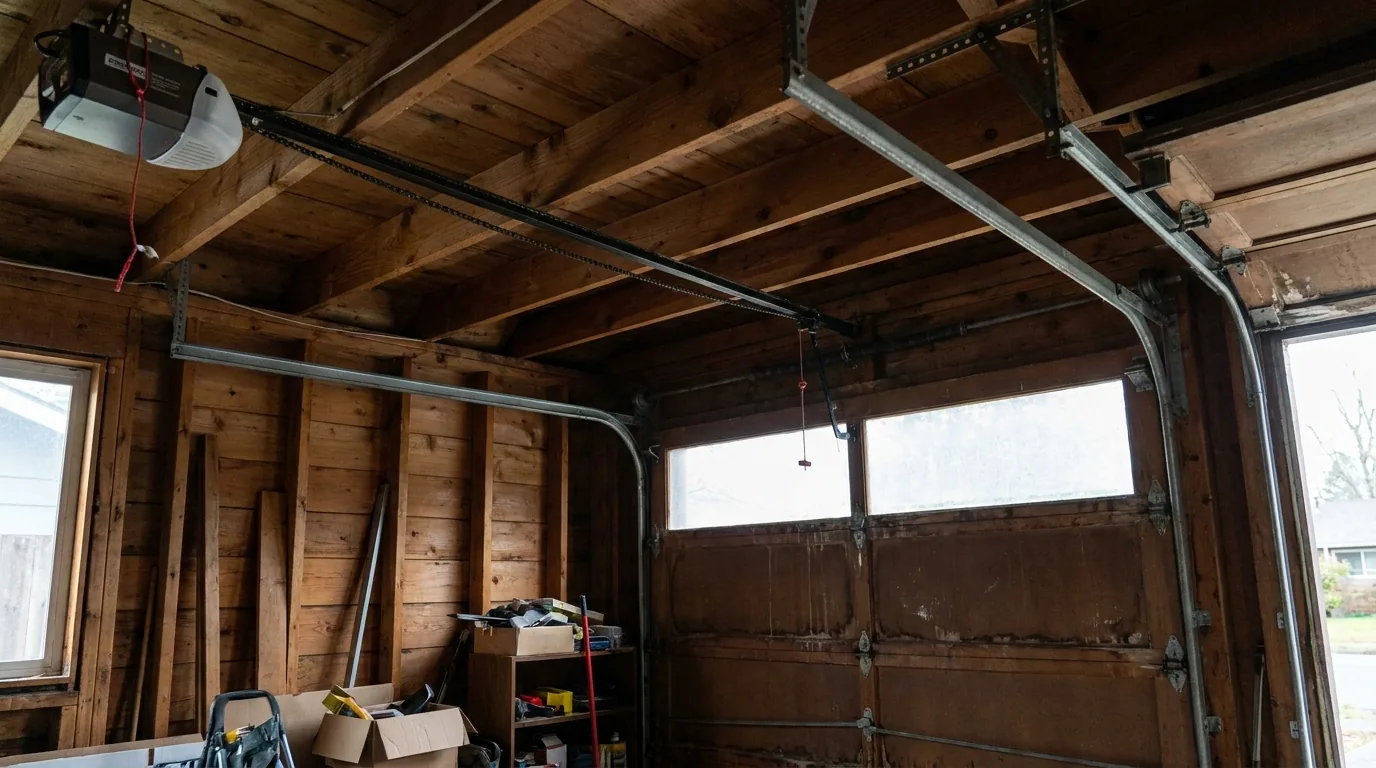
If the door closes and then reverses before it reaches the floor, that is a travel-limit or force-setting problem at the opener, not a seal problem. If the door closes all the way and then comes back up a moment later, the opener's safety reverse is being triggered. A blocked or misaligned photo-eye is one possibility there, but only if the door is coming back up while it is on the way down; the photo-eye is a safety device on the closing travel and has no role in a door that will not start or one that stops short. If the door hangs at an angle or feels heavier than usual in normal use, the cause may be in the springs or cables, and those are technician work. A technician can separate these by checking the door's travel, the opener settings, and the condition of the springs and cables during a service visit.
What a technician does that you should not
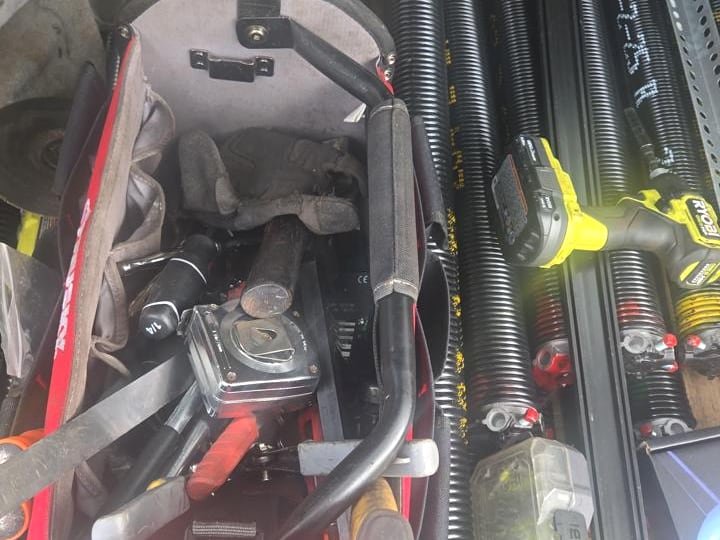
The bottom seal and the weatherstripping around the opening are the parts a homeowner can reasonably assess from outside. Everything behind them is not. Adjusting the travel limits and force settings on the opener, checking spring tension, and working with the cables all belong to a technician. So does any correction to a door that is sitting crooked or binding in its tracks.
If you are in Auburn, Kent, Federal Way, Renton, or anywhere else in our service area and your door will not stay down in the wind, call Liv Garage Door Repairs & Service at (425) 386-7589 or email info@livgaragedoors.com. We are a registered Washington State contractor, and we handle residential and commercial garage door service, including tune-ups and safety inspections that cover the seals, the hardware, and the opener settings together.