It is a familiar pattern in Auburn and the surrounding suburbs: the door goes up without complaint, but in the cold, wet months it stops partway down, reverses before it reaches the floor, or refuses to move at all when you press the button. The fact that it opens fine is genuinely useful information. It narrows the list of suspects. A door that opens normally is being carried by a spring system that can still hold its weight, and it is being driven by an opener that can still move it. What has changed is something in the closing direction, and in this climate that is often a setting, a seal, or a worn joint rather than a broken spring.
Separate "won't start" from "starts and reverses"
These are two different problems with two different shortlists, and mixing them up sends you looking in the wrong place.
If the door does not move at all when you press the button, the opener is not receiving a command it will act on. The most likely causes are a wall control or remote that has lost its signal, a safety device reporting an obstruction, or a logic board that has dropped into a fault state. A useful test that involves no tools: try the wall button and a remote separately. If one works and the other does not, the problem is in the control that failed. If neither works, the fault is at the opener itself.
If the door starts down and then reverses before it reaches the floor, the opener is being told to stop and go back up. That is a travel-limit or force-setting problem far more often than anything else. The opener has a down-limit that tells it where the floor is, and a force setting that tells it how much resistance to tolerate before it gives up and reverses. Cold, damp weather changes the friction in the door's travel, and a force setting that was marginal in summer can trip in winter. A technician adjusts both at the opener head; they are not homeowner adjustments.
The photo-eye, and the one condition where it applies
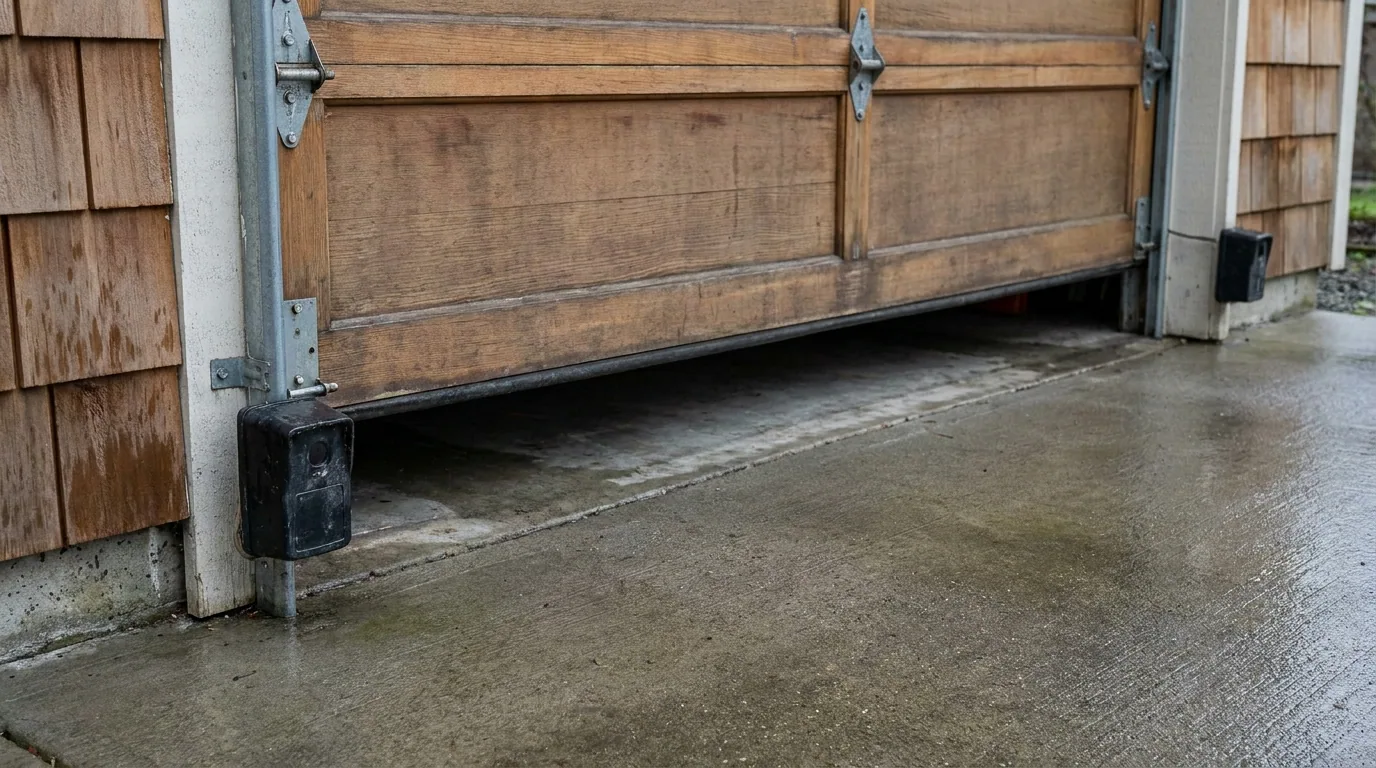
The photo-eye is the pair of small sensors mounted at the bottom of the track on each side of the door. It is a safety device on the closing travel only. If the beam between the two eyes is blocked or the eyes are knocked out of alignment, the door will reverse while it is on its way down. That much is mechanically certain.
What the photo-eye does not do is prevent a door from starting, cause a door to open a little and then reverse, or make a door stop short on the way up. Those are limit and force problems. So the photo-eye only earns a place on the list when the symptom is a door that reverses while closing. When it does, a technician confirms the alignment and the wiring as part of the service call. If the door never leaves the top, the eyes are not your answer, and the technician will look at the limits and force settings instead.
What the wet season does to the closing direction
The bottom seal is the part most exposed to the weather, and it is the part that changes most between summer and winter. A rubber seal that has stiffened, flattened, or torn can drag on the floor through the last few inches of travel. The opener reads that drag as resistance and reverses the door. From outside the closed door, with the garage empty, you may notice a gap along the bottom, a seal that looks compressed on one side, or daylight showing under one corner.
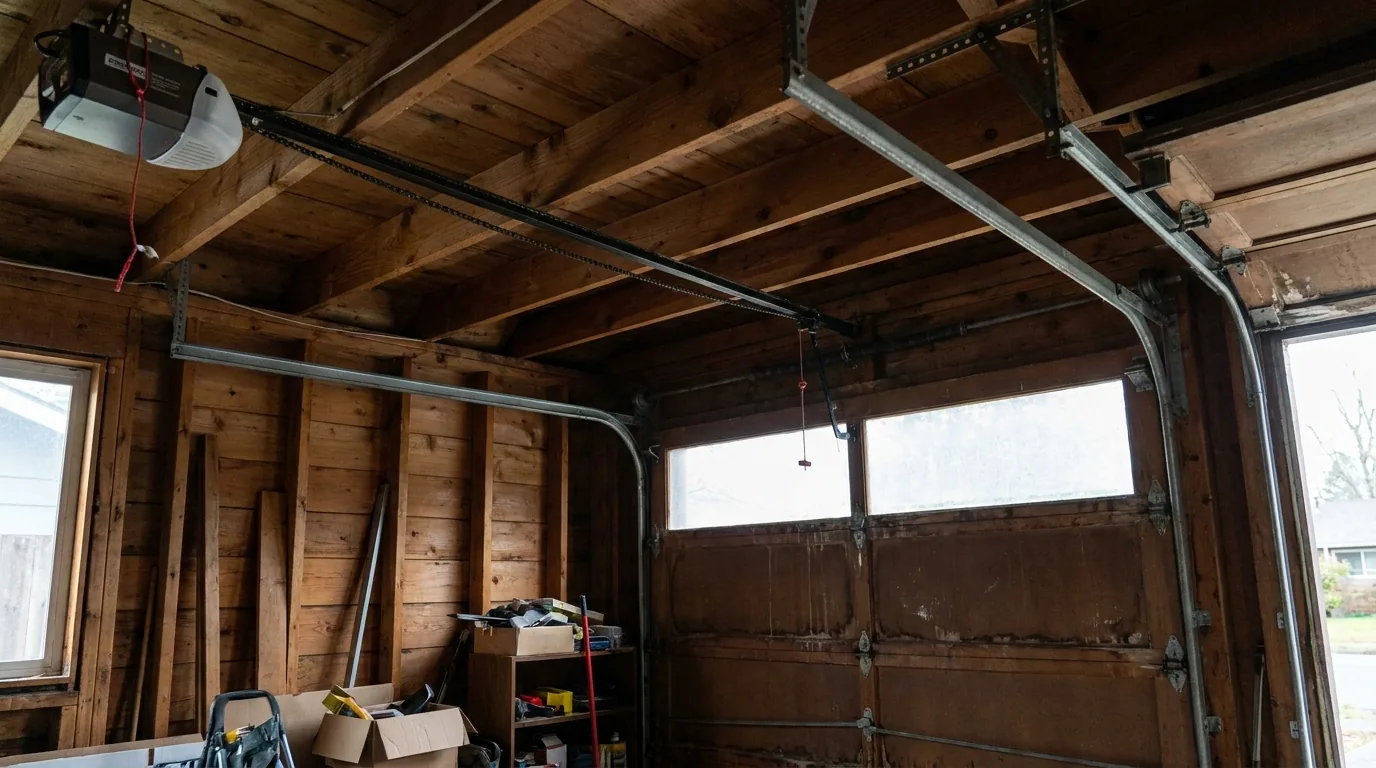
Hinges and rollers are the other suspects. Months of damp stiffen the joints, and a door that has to overcome more friction on the way down will trip a force setting that used to be fine. A door that feels heavier in normal use, or that makes a new noise at the start of a cycle, is telling you the hardware is dragging. Freeing up or replacing that hardware is technician work.
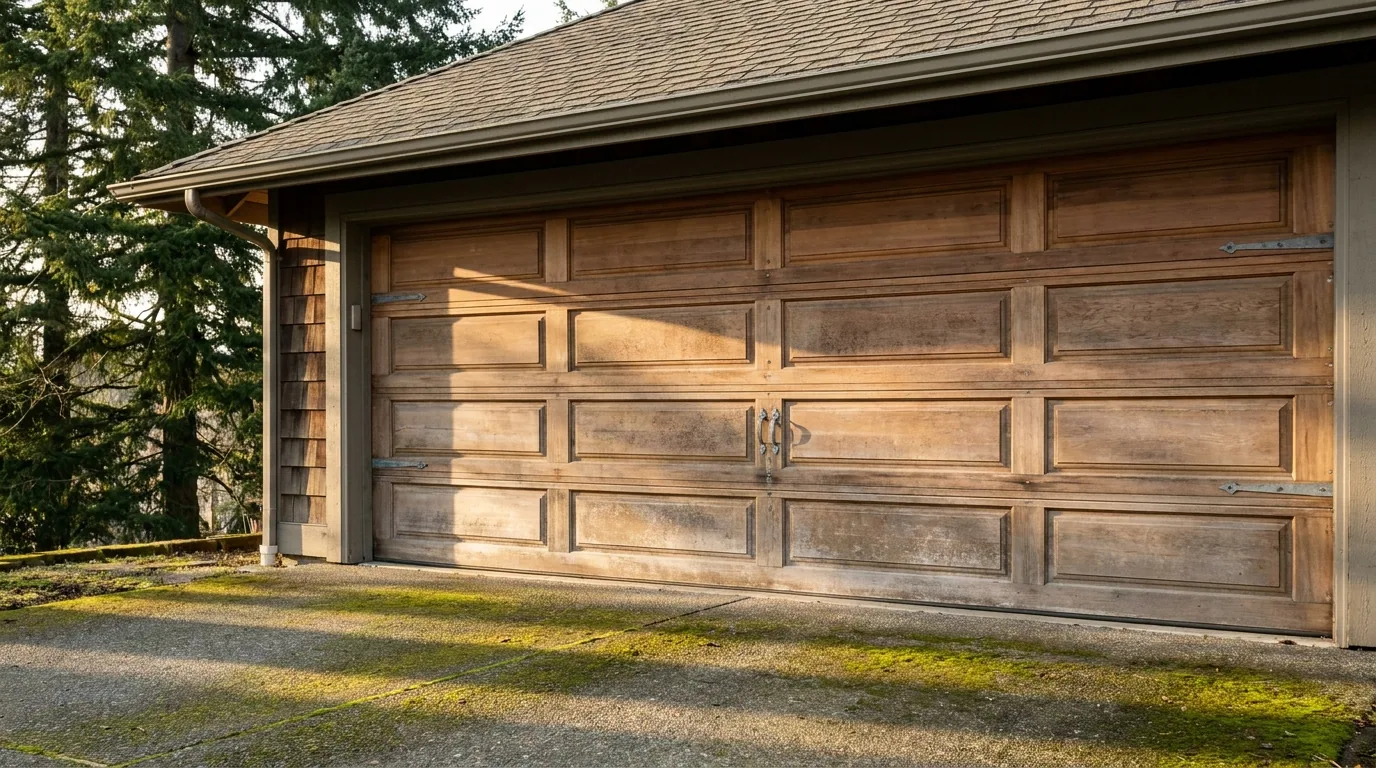
Wooden doors behave differently again. Wood takes on moisture and swells, and a swollen door can bind in the frame or against the stop molding on the way down. If the door is wood and the problem arrived with the first long stretch of rain, swelling is worth raising with the technician.
What a technician checks, and what you can watch for
When a door opens fine but will not close, the technician's sequence usually runs from the opener outward: the down-limit and force settings at the head, then the photo-eyes and their wiring, then the door's travel — the seal, the hinges and rollers, the track alignment, and the springs and cables. The springs and cables are inspected by the technician, never by the homeowner; a torsion spring under load and a cable under tension are both dangerous to handle, and the same goes for anything inside the opener drive train.
From outside the door, with the garage empty, you can note what you see and hear: the door sitting crooked in the opening, a gap along the top or bottom, a seal that looks worn on one side, a new scrape or shine mark on the track, or a noise at the start of the cycle that was not there last month. Those observations save diagnostic time and help the technician arrive pointed in the right direction.
If the door will not close at all and you need it secured, call (425) 386-7589. Liv Garage Door Repairs & Service is a Washington State registered contractor serving Auburn, Kent, Federal Way, Renton, Tacoma, Puyallup, Seattle, Enumclaw, Maple Valley, Covington, Bonney Lake, and Sumner, with weekday hours Monday through Saturday, 7:00 AM to 8:00 PM, Sunday emergency service only, and 24/7 emergency dispatch. You can also reach the team at info@livgaragedoors.com or at 5548 34th St SE, Auburn, WA 98092.