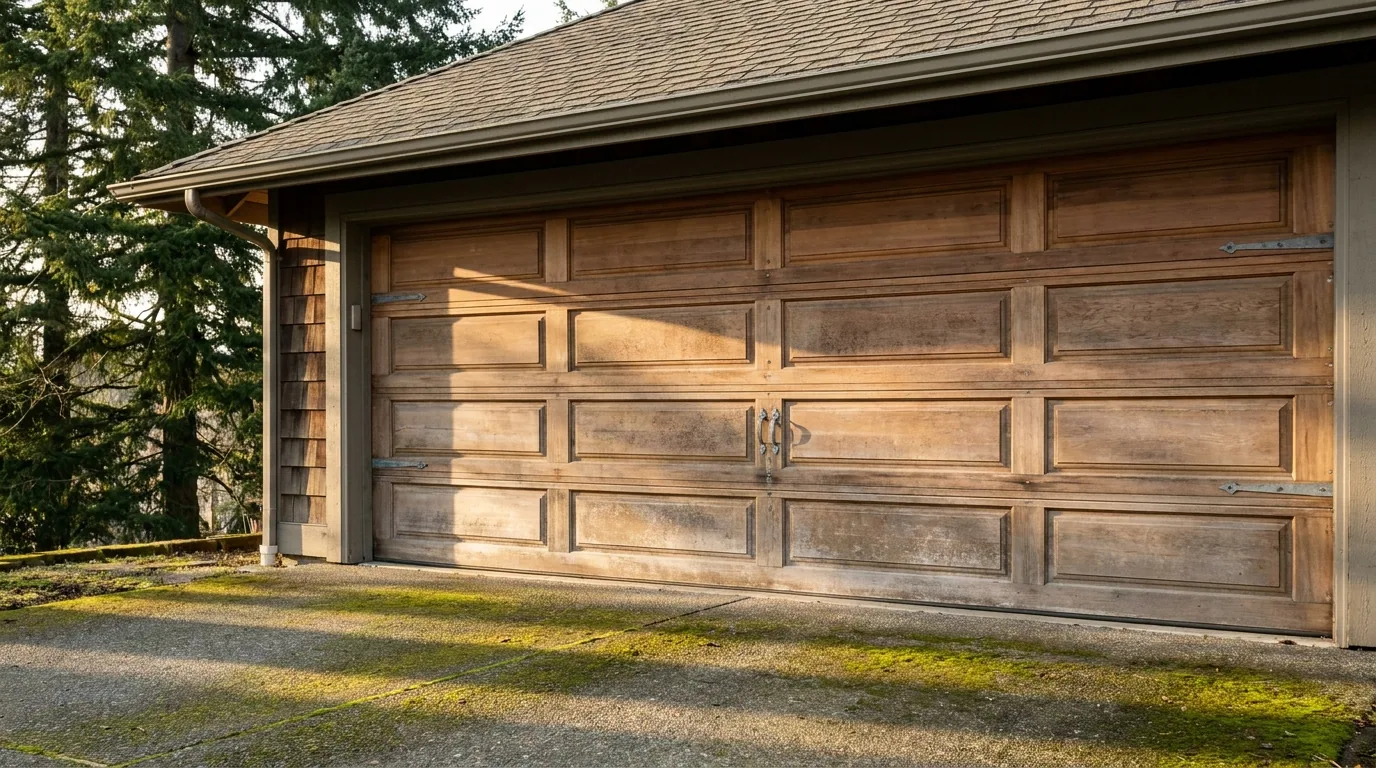
If you have owned a house in Auburn or the surrounding suburbs for more than a few years, you have probably noticed them: thin orange-brown streaks running down the face of the garage door, starting at a hinge or a roller bracket and fanning out as they dry. Sometimes it is a single trail under one hinge. Sometimes it is a row of them, one per hinge, like a tally of the door's age. Homeowners often read this as the beginning of the end for the door itself. Most of the time it is not. It is the hardware telling you it has been sitting in damp air for a long stretch, and that it is the part of the system wearing out first.
Why the streaks start where they start
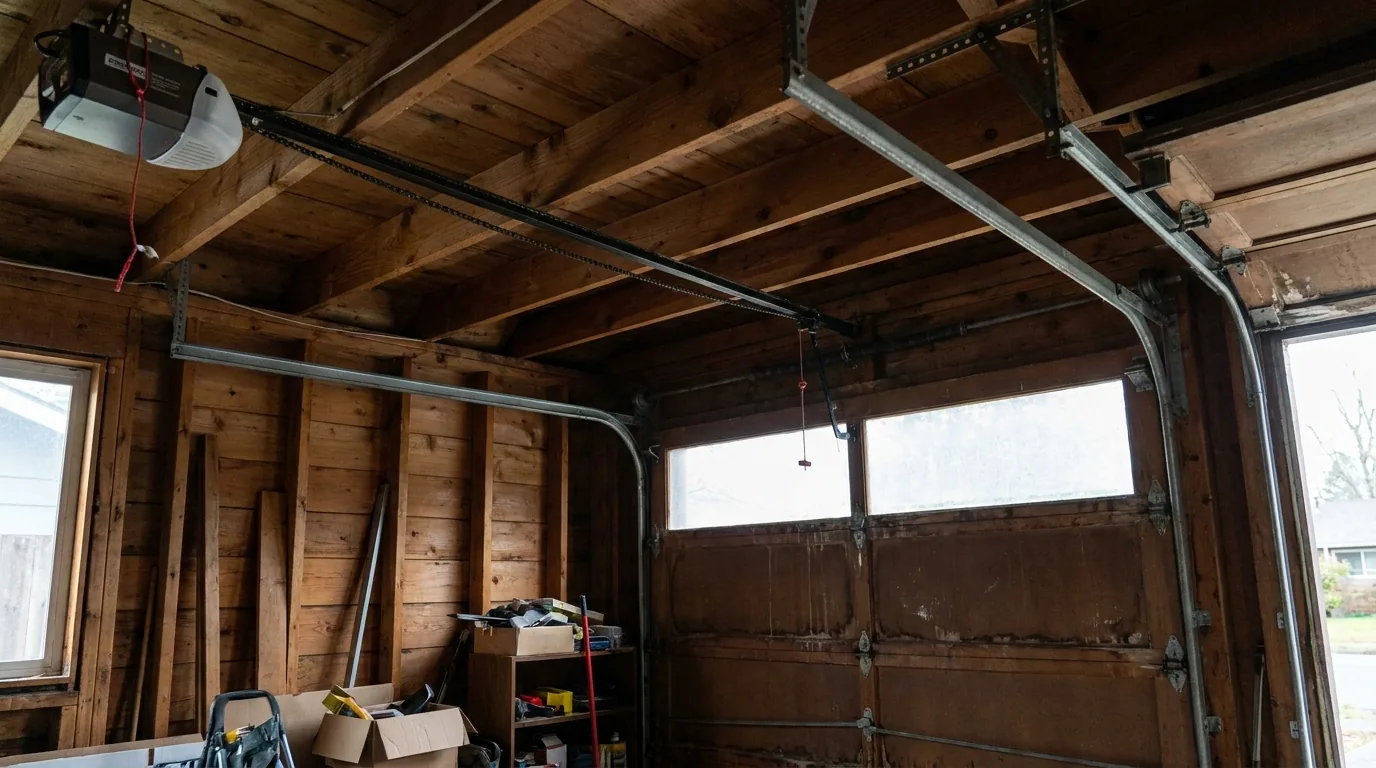
Hinges and rollers are the moving joints of a sectional door. Every hinge pivots each time the door goes up or down, and every roller turns inside its bracket as it tracks through the curve. That movement is what keeps them working, and it is also what wears them: the plating on a builder-grade hinge is thin, and the pivot points are small. Once the plating wears through at a pivot, bare steel is exposed. In a climate with months of steady rain and damp air that never fully dries out, bare steel does what bare steel does.
The streaks run downward because water carries the rust with it. Rain blowing past the bottom seal, condensation on the door panels, and simple humidity in an unheated garage all put moisture on the hardware. It collects at the hinge pivots, sits there, and the rust travels with the next bit of runoff. The pattern you see on the outside of the door is a record of where the hardware is wetting out.
What damp does that dry heat does not
In a drier climate, a builder-grade hinge might go many years before it shows anything. Around Auburn the same hinge is wet and drying, wet and drying, for most of the year. That cycle matters more than any single soaking. Each wet period lets corrosion start at a pivot; each dry period leaves it in place. Over a few seasons the pivot gets rough, the roller stops turning freely, and the door starts to drag slightly at the hinges.
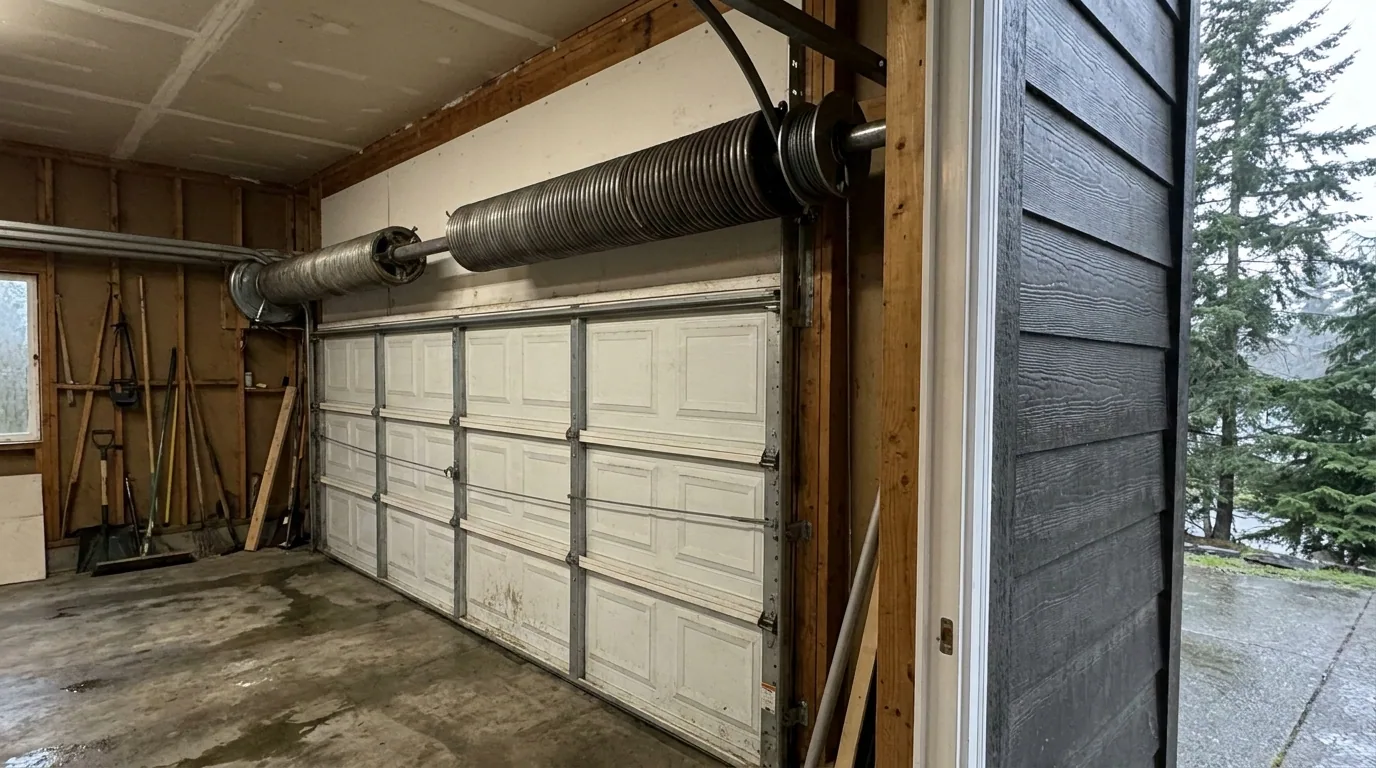
This is why hardware tends to fail before springs do here. Springs are oil-tempered steel under tension, tucked up on the shaft where they stay drier. Hinges and rollers are out at the edges of the door, exposed to whatever comes in past the seal. When a door starts to feel stiff or the opener sounds like it is working harder, the first thing a technician checks is the hinge and roller condition, because that is where the friction usually is.
Reading the door from outside
You do not need to get up on a ladder to know something is changing. A few things are visible or audible in normal use:
- Rust trails starting at a hinge or roller bracket and running down a panel.
- Rough or grinding sound at the start of a cycle, when the door first breaks loose from the floor.
- A door that feels heavier in ordinary use than it did a year ago.
- A slight hesitation or shudder as the door passes a particular height.
- Dark or discolored spots on the bottom seal, where water has been sitting.
None of these on its own tells you exactly which part is at fault. A grinding noise at the start of a cycle can come from a stiff roller, a dry hinge, or a bearing that has lost its grease. A door that feels heavier can be dragging hardware, a spring system that is no longer carrying its share, or both. The way to separate them is to have a technician check the hinge and roller condition against the spring system. If the hardware is free and the door still feels heavy, the springs are the next place to look. If the hardware is stiff, that is the first thing to correct.
What not to do about it
The temptation with a rusty hinge is to spray something on it and move on. A general-purpose lubricant will quiet a hinge for a while, and it will also attract dust, which turns into a gritty paste at the pivot and speeds up the wear. More importantly, a hinge that is rusted at the pivot is often a hinge that is losing material, and no amount of lubricant puts that material back.
What you should not do is work on the spring system, the cables, or anything attached to the opener drive train. Those carry the door's weight and store energy, and they are technician work. The same goes for testing whether the door is balanced. If you are wondering whether the door is fighting the springs, that is a question for someone with the tools to check it safely.
Keeping hardware ahead of the damp
The practical approach in this climate is to treat hinges and rollers as wear items and have them checked on a regular schedule, the way you would check the bottom seal. A tune-up and safety inspection covers exactly this: the technician works through the hinges and rollers, checks the spring system and cables, and looks at how the door is sitting in the opening. If a hinge is corroded at the pivot or a roller has stopped turning, replacing it early keeps the drag off the opener and the stress off the rest of the door.
If the streaks on your door have been there a while and the door has started to sound different, that is worth a look. Liv Garage Door Repairs & Service works on residential and commercial doors across Auburn, Kent, Federal Way, Renton, Tacoma, Puyallup, Seattle, Enumclaw, Maple Valley, Covington, Bonney Lake, and Sumner. You can reach the shop at (425) 386-7589 or info@livgaragedoors.com, or stop by 5548 34th St SE, Auburn, WA 98092. Weekday hours are 7:00 AM to 8:00 PM Monday through Saturday, Sunday is emergency service only, and there is 24/7 emergency dispatch.