Every fall, the same call pattern starts in Auburn and the surrounding suburbs. The door that opened easily in August now feels sluggish, the opener sounds like it is working harder, and the door seems to drag somewhere in the cycle. Homeowners often assume the springs are going. Sometimes they are, but in this part of Washington the wet months tend to wear on a different set of parts first: hinges, rollers, bottom seals, and the door itself. A door that feels heavier in normal use is telling you something, and the trick is working out which part of the system is talking.
What the wet season actually does to a door
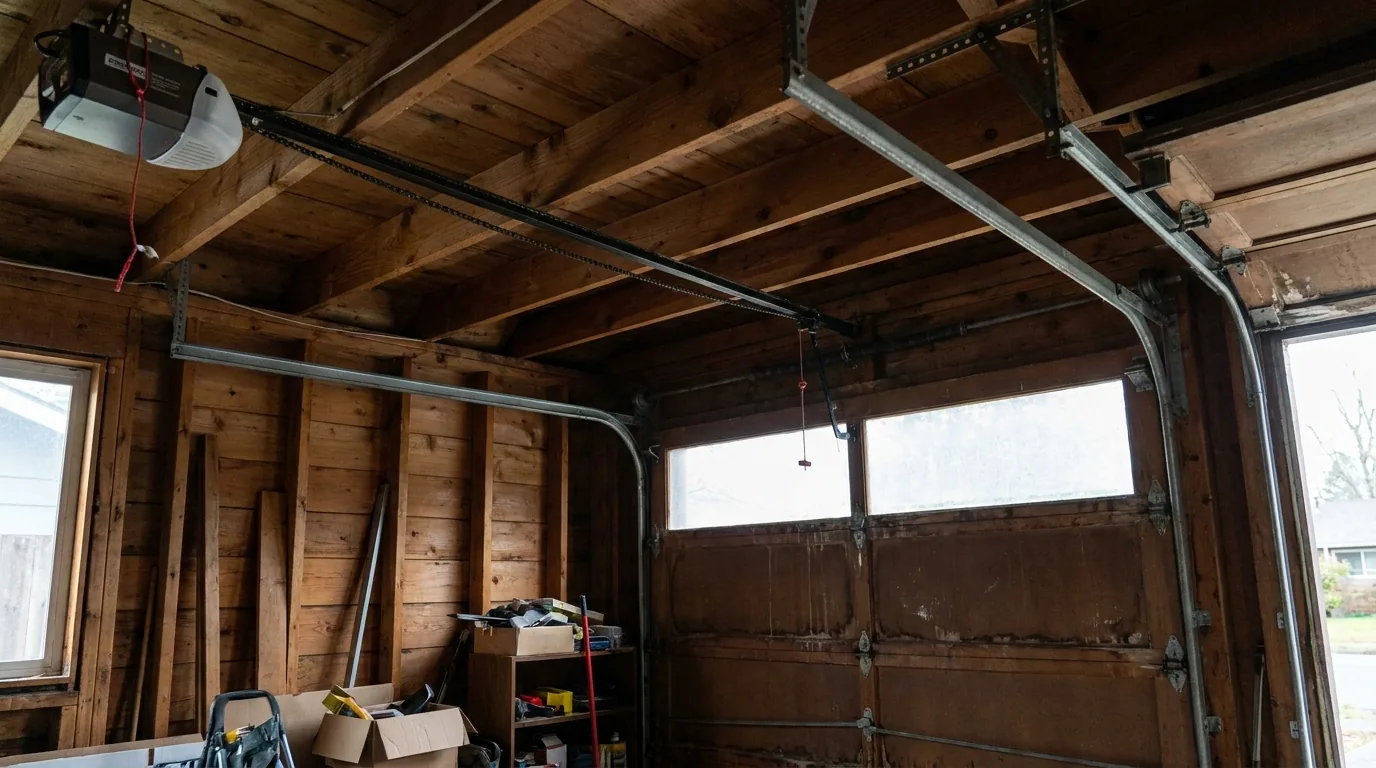
Months of steady rain and constant damp are hard on steel hardware. Hinges and rollers are the moving joints of the door, and they are the parts most exposed to moisture that gets past the bottom seal and sits in the garage. When those joints stiffen, the door has to overcome more friction through every inch of travel. The opener feels it too, because the opener is moving a door that the springs have already made manageable, and extra drag at the hinges and rollers shows up as strain at the motor.
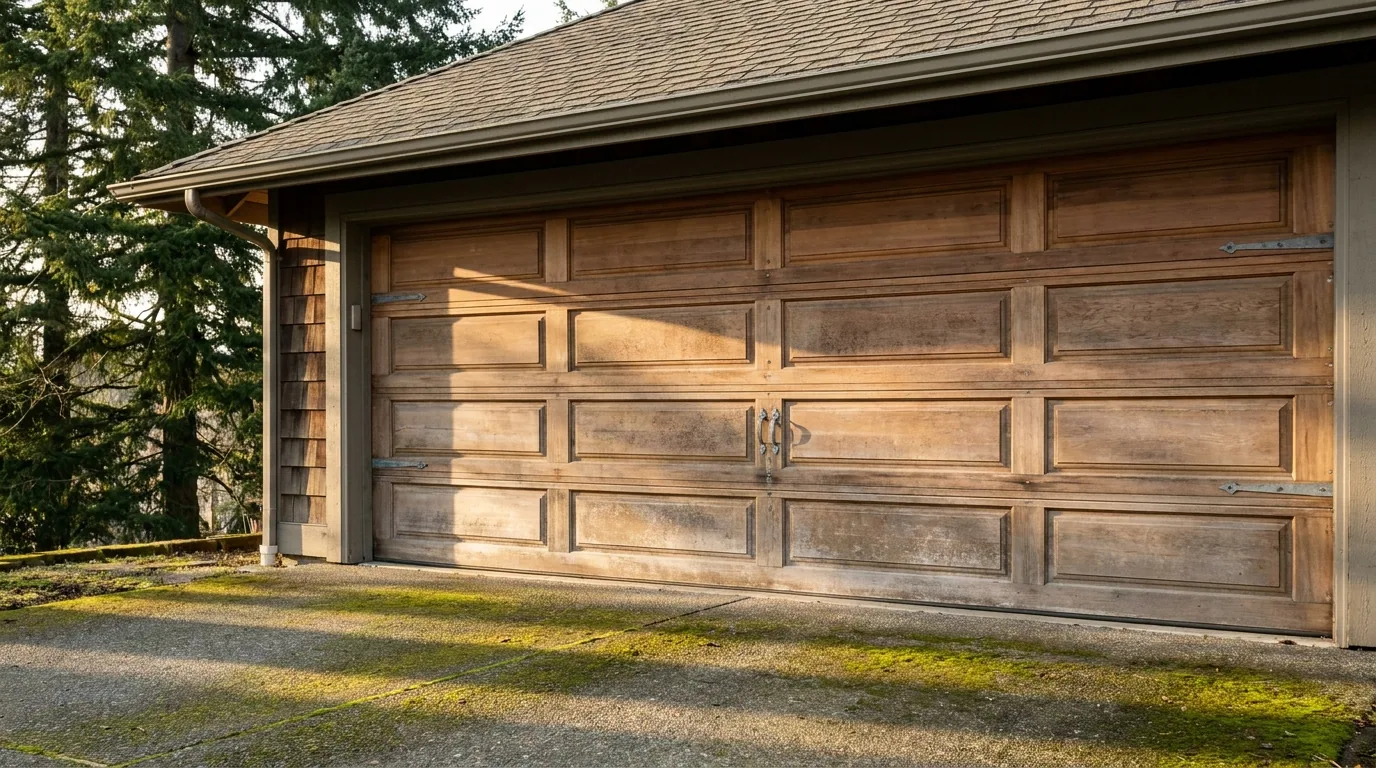
Wooden doors behave differently. Wood takes on moisture and swells, and a door that was true in summer can bind slightly in its frame once the damp sets in. That shows up as a door that moves unevenly, rubs on one side, or needs a little more effort than it used to. None of this is a spring failure by itself, but it adds load to a spring system that is already carrying the door's weight.
Symptoms you can notice from outside the door
You do not need to touch any moving parts to gather useful information. Run the door once from the wall button and watch it from inside the garage, standing clear. A few things are worth noting:
- The door sits crooked in the opening, with one side higher than the other.
- There is a gap along the top of the door when it is closed.
- The door feels heavier than usual when you use it normally.
- There is a new noise at the start of the cycle that was not there before.
- The door moves in jerks rather than a smooth run.
Each of these narrows the field. A crooked door is not the same problem as a door that is level but sluggish, and a door that is noisy at the start of a cycle is different again. Write down what you see and when it happens; that is the most useful thing you can hand a technician.
When the cause isn't certain, don't guess
A door that feels heavier in normal use has several possible causes. Stiff or rusted hinges and rollers are one. A binding wooden door is another. A spring system that is no longer carrying its share of the weight is a third, and a track that has shifted slightly is a fourth. The test that separates them is a technician's inspection of the springs, cables, rollers, and track alignment, not a guess made from the driveway.
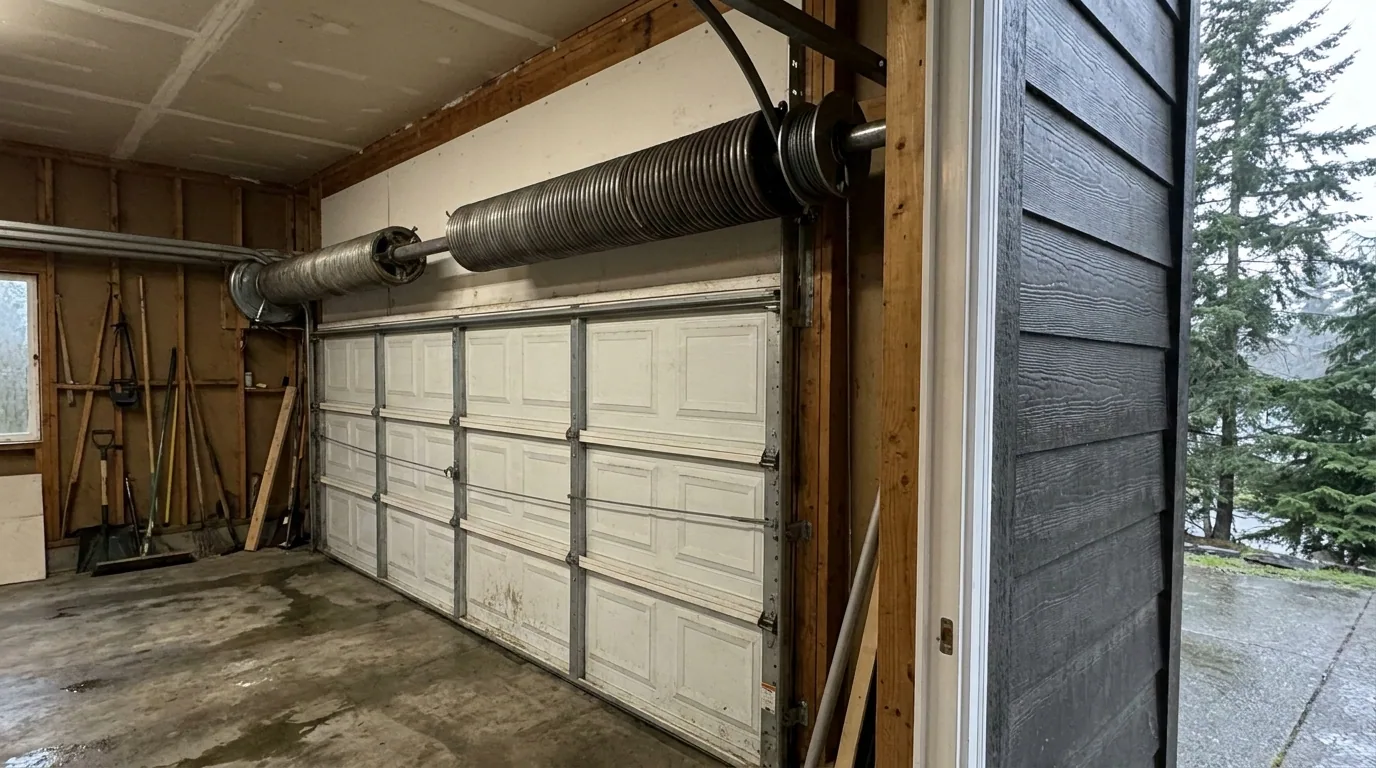
A crooked door is the same story. A snapped cable will let one side of the door hang lower, and a broken torsion spring cannot hold the door's weight. A bent track can also pull the door out of line. All three produce a door that sits unevenly, and telling them apart means inspecting the hardware directly. That is technician work, and it is worth saying plainly: springs and cables are under tension and should not be handled by a homeowner.
What routine service covers in the wet months
A tune-up and safety inspection is the practical answer to the seasonal drag. During that visit, the technician inspects the springs and cables, checks the rollers and hinges for stiffness and wear, tests the door's balance and travel, and adjusts the opener's force and limit settings where they need it. Lubrication of the moving joints is part of the job, and it is the single most effective thing you can have done before the rain settles in for the season.
The bottom seal deserves attention too. A seal that has hardened or torn lets water and damp air into the garage, which is what drives the rust and swelling in the first place. Replacing a worn seal is a small job that protects the rest of the hardware.
If your door has started to feel heavier, sit crooked, or make a new noise at the start of the cycle, call Liv Garage Door Repairs & Service at (425) 386-7589 or email info@livgaragedoors.com. The company serves Auburn, Kent, Federal Way, Renton, Tacoma, Puyallup, Seattle, Enumclaw, Maple Valley, Covington, Bonney Lake, and Sumner, with weekday hours from 7:00 AM to 8:00 PM, Sunday emergency service only, and 24/7 emergency dispatch. Liv Garage Door Repairs & Service is a registered Washington State contractor based at 5548 34th St SE, Auburn, WA 98092.