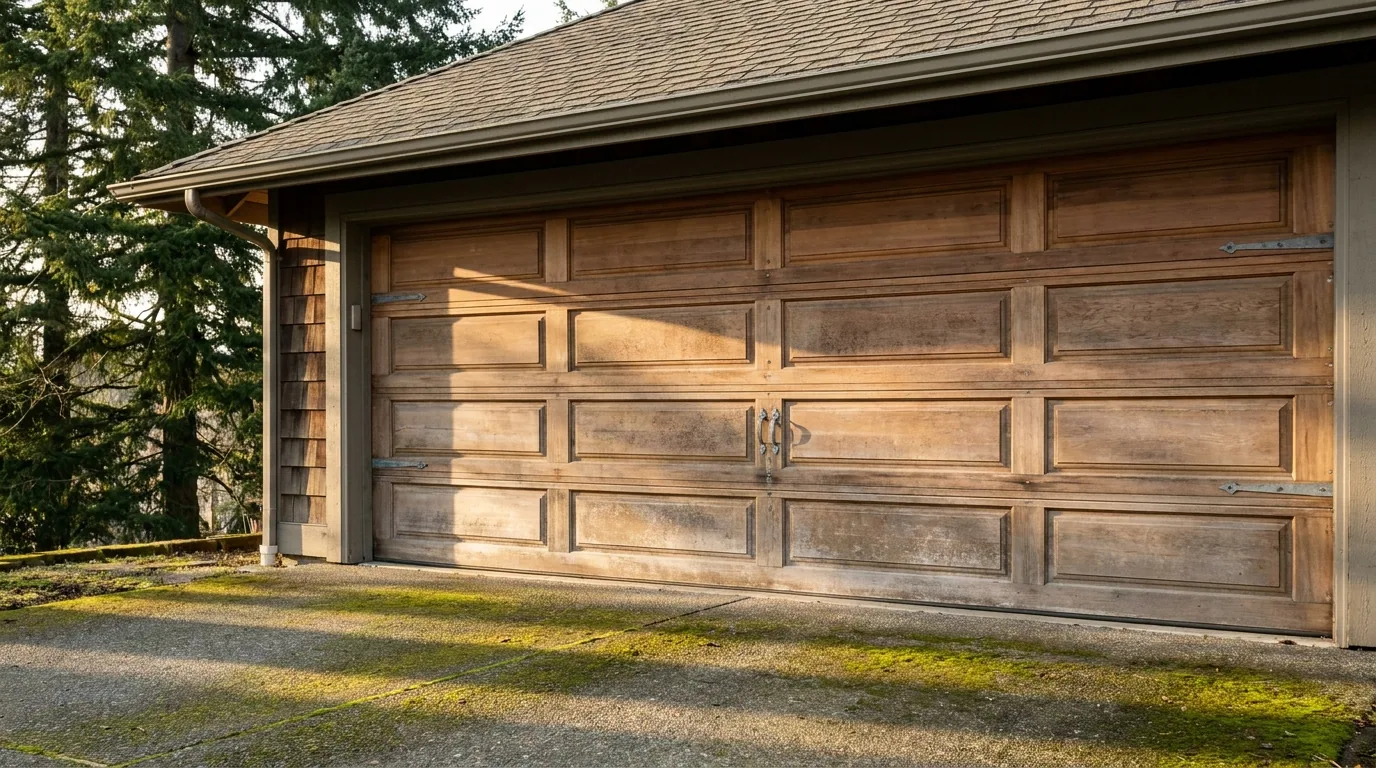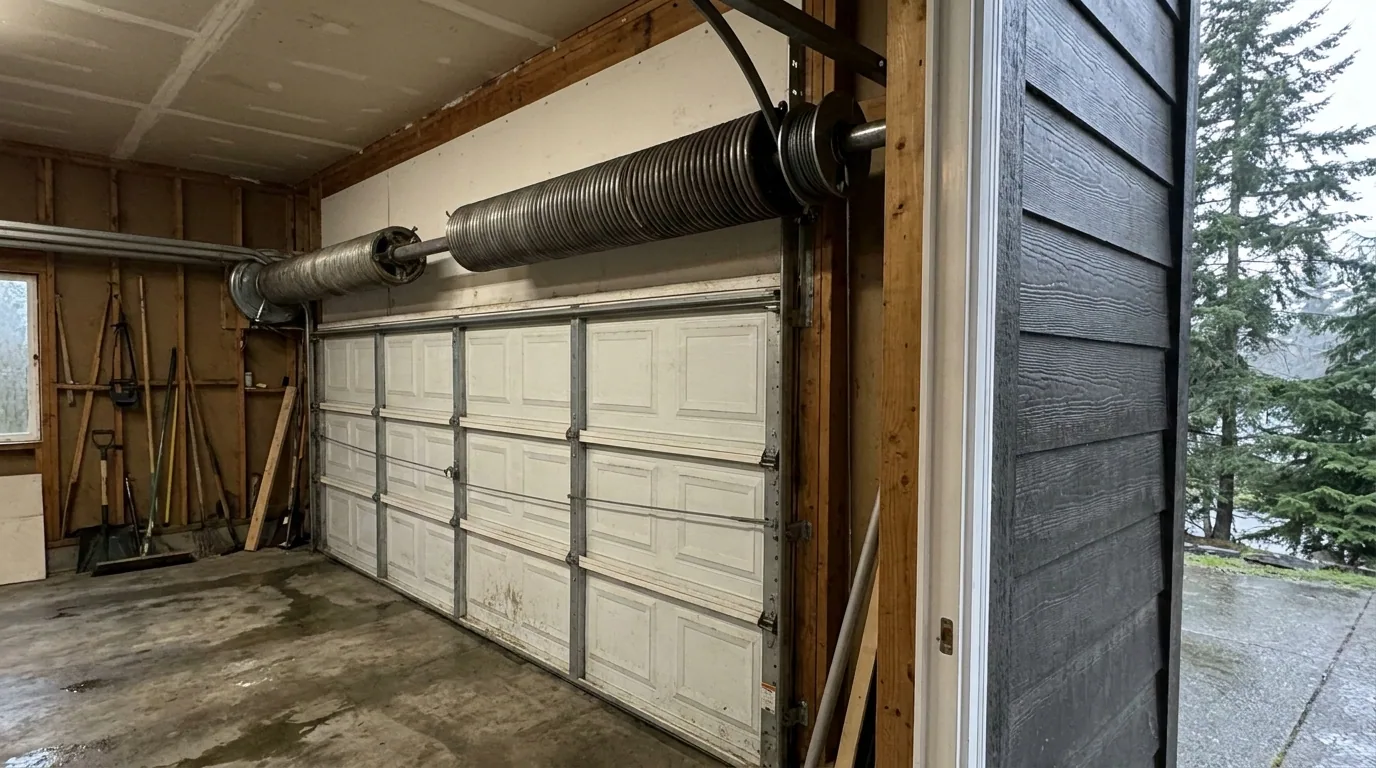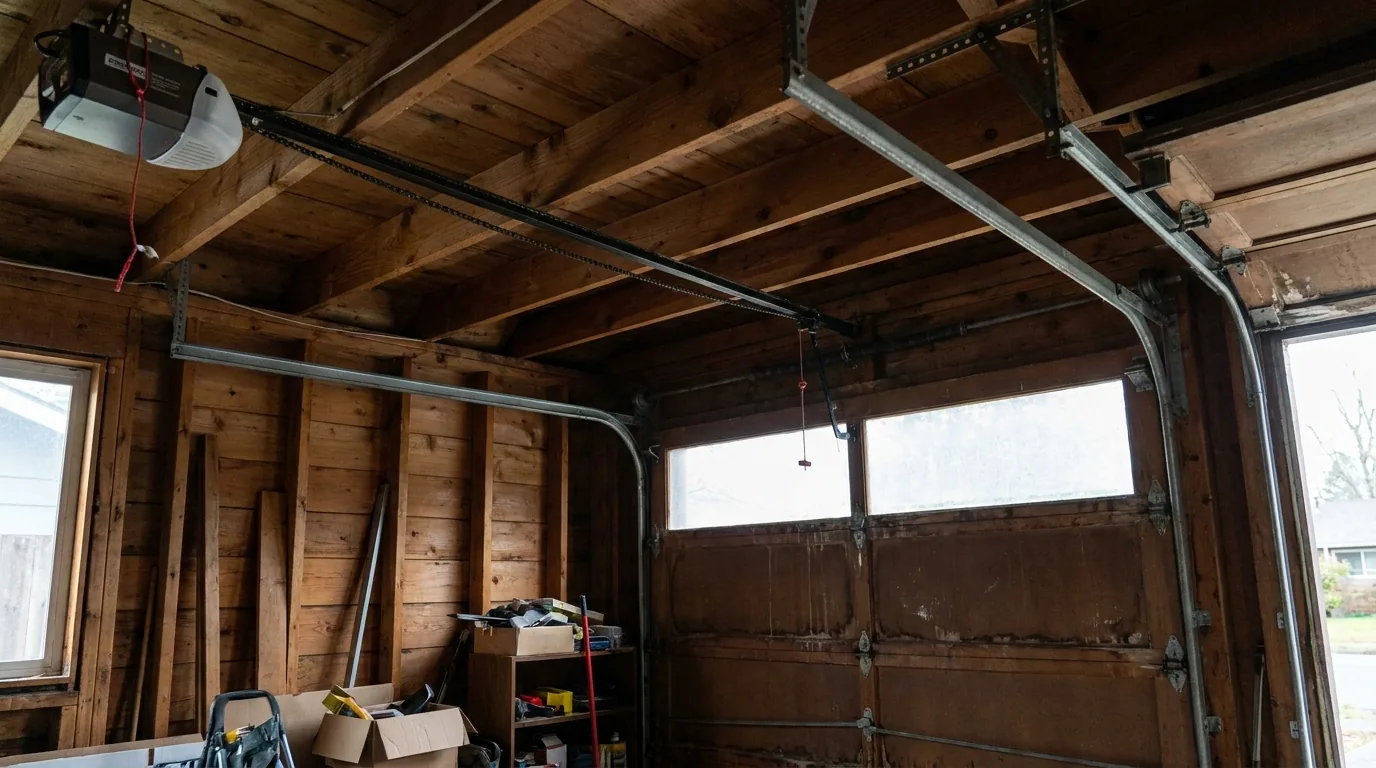
In Auburn and the surrounding areas, the rain settles in for months at a time. Your garage door sits in that damp air day after day, and the small moving parts—the hinges and rollers—do the most work and take the brunt of it. This is not a sales pitch; it is what we see on service calls. The springs may still be fine, but the hardware has quietly been rusting, and that changes how the door moves.
What the damp actually does
Steel hinges and roller stems are usually plated or painted, but that protection wears thin where parts rub together. Add months of damp air and you get surface rust. Rust makes the metal rough, so the roller does not turn freely in its hinge. The door then drags a little on every cycle. You may not notice at first, but the opener works harder, the door gets louder, and eventually a roller can seize or a hinge can wear through.
Wooden doors are a different story. The panels and bottom rails can soak up moisture and swell. A swollen door may bind in the frame or sit unevenly. That puts extra load on the hinges and rollers, and on the opener.
What you might notice from outside the door
You do not need to climb a ladder or touch the hardware to spot trouble. With the garage empty, watch and listen from the driveway or just inside the opening:
- The door sounds louder than it used to—a grinding, squealing, or scraping noise at the start of a cycle.
- The door does not run smoothly; it may shudder or hesitate.
- The door sits crooked in the opening, or you see a gap along the top or one side.
- The door feels heavier when you use it normally.
- You see rust stains on the driveway or on the bottom of the door.
None of these tells you exactly which part is at fault. A squeal could come from a dry roller, a dry hinge, or a bearing. A crooked door could mean a snapped cable, a broken spring, or a bent track. That is why a technician inspects the hinges, rollers, cables, and springs directly.
What you can do yourself
You can keep the door clean and watch for changes. Wash the door panels with mild soap and water to remove dirt and salt, and rinse well. Keep the area around the door clear so you can see the bottom seal and the floor. If you notice the door getting louder or heavier, call for service rather than trying to fix it yourself.
Do not lubricate the hinges or rollers unless the door manufacturer's instructions specifically say to. Some hardware is meant to run dry, and the wrong lubricant can attract grit and make things worse. If you are unsure, ask a technician during a tune-up.
When to call a technician
Any noise that is new or getting worse, a door that feels heavier, or a door that sits crooked is a reason to have the door looked at. A technician can inspect the hinges and rollers, check the cables and springs, and tell you whether the hardware needs adjustment or replacement. They can also check the bottom seal, which often fails in wet weather and lets water into the garage.
Never try to adjust or replace hinges, rollers, cables, or springs yourself. Those parts are under tension and can cause serious injury. The same goes for the opener drive train. If the door will not move at all, or the opener runs but the door does not, call for service.
If you are in Auburn, Kent, Federal Way, Renton, or any of the surrounding areas, Liv Garage Door Repairs & Service can help. Call (425) 386-7589 or email info@livgaragedoors.com. We are a registered Washington State contractor serving Auburn and the surrounding communities. Regular tune-ups and safety inspections can catch hinge and roller problems before they leave you stranded.