Every year around the end of the wet season, a run of calls comes in with the same story: the door worked all winter, then one morning it came down hard or would not come up at all, and the spring is broken. It is tempting to blame the last wet month, but a torsion or extension spring rarely fails because of one season of rain. It fails because the hardware around it has been quietly degrading for years, and the wet months are when the accumulated wear finally shows. This article covers what damp does to an older door, what you can safely observe from outside it, and which work belongs to a technician.
What a broken spring looks like from the driveway
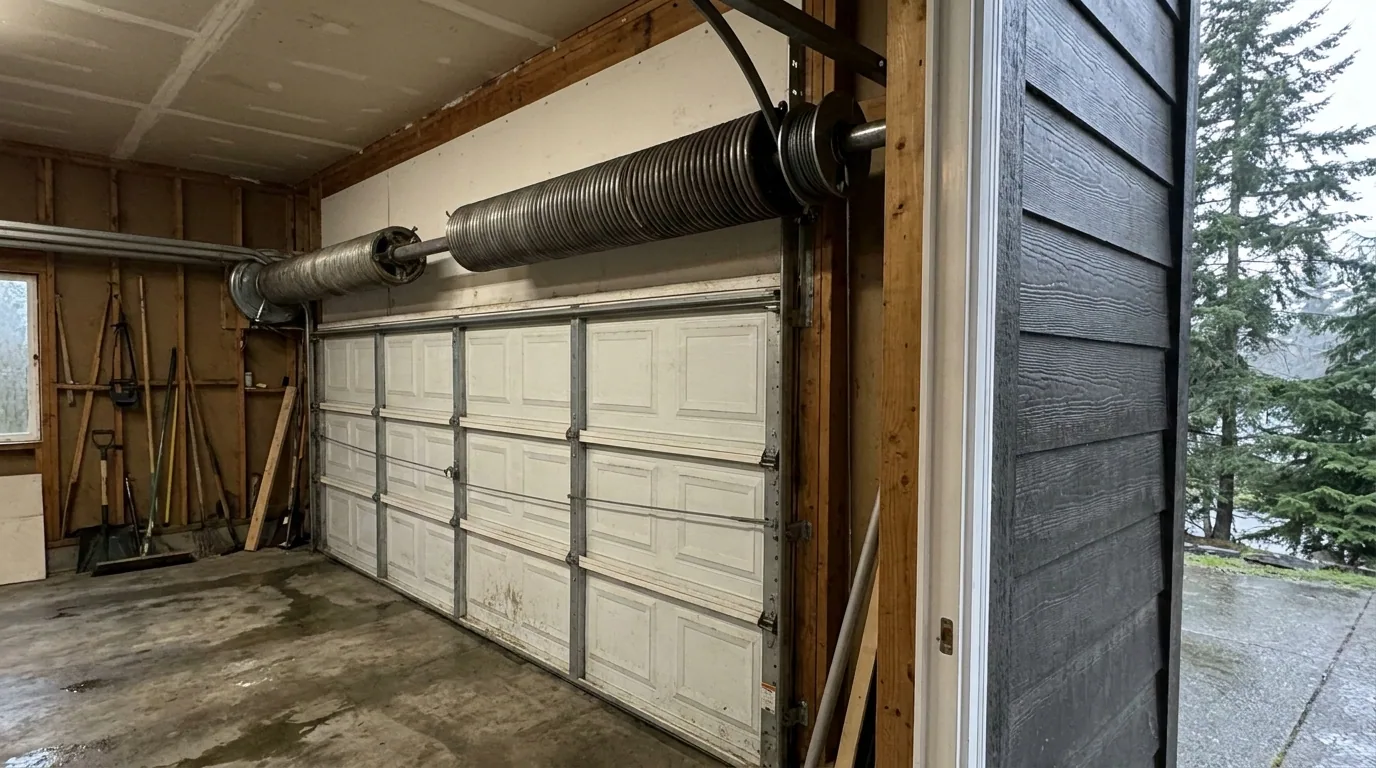
A torsion spring that has snapped cannot hold the door's weight, and that produces a few recognizable symptoms. The door may come down fast and hard when you press the button, or the opener may strain and stall trying to lift it. You may hear a sharp bang from the garage at some point when no one was using the door. From outside, with the garage empty, you might see the door sitting crooked in the opening or a gap along the top edge where the panels no longer meet the header squarely.
Those same symptoms can also come from a snapped cable or a bent track, so a crooked door on its own does not tell you which part failed. What separates them is what a technician finds on inspection: the springs, the cables, and the track are checked directly, and the door is tested for balance with the opener disengaged. That is not work for a homeowner. Torsion springs are under heavy tension, and cables are under load whenever the door is up. Do not try to move the door by hand, pull the emergency release, or reach for the springs or cables yourself.
How damp wears an older door before the spring goes
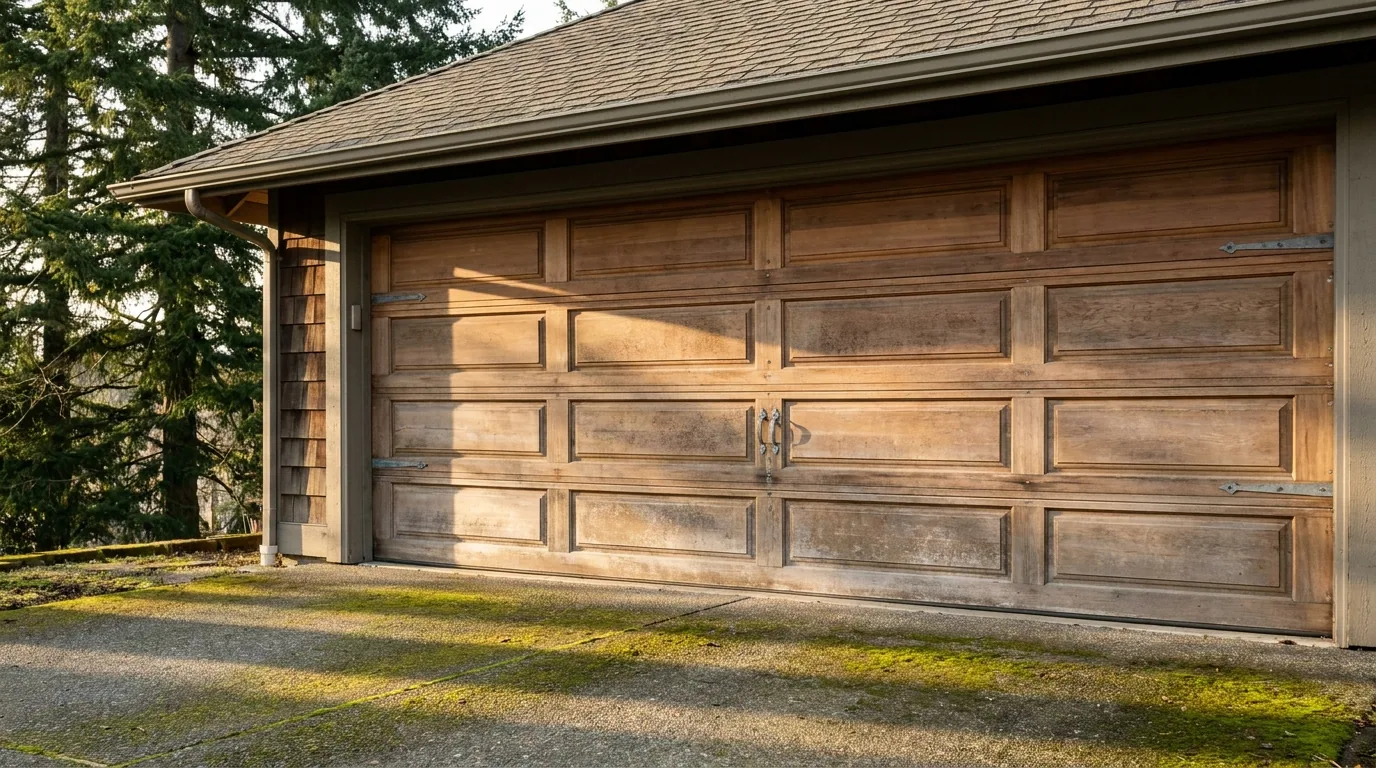
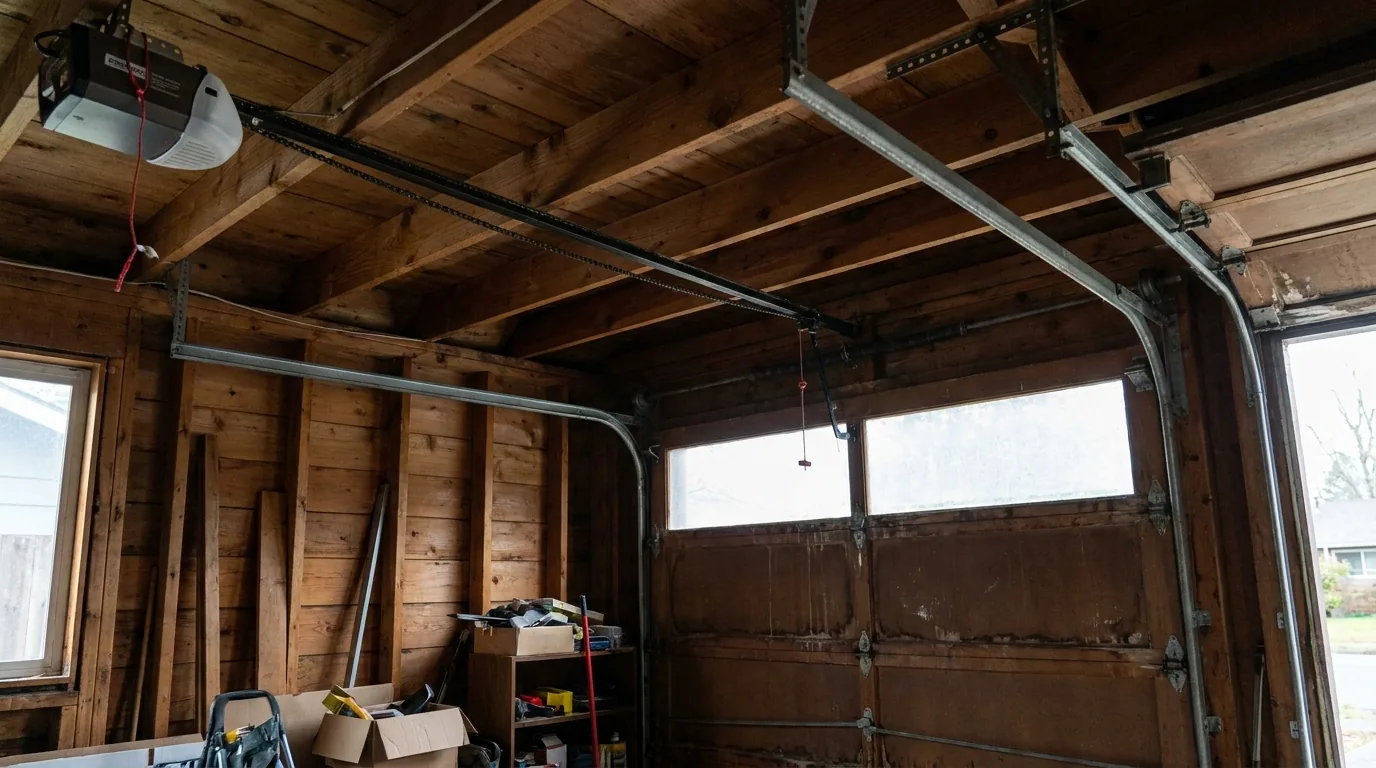
In Auburn and the surrounding suburbs, the wet season is long and the air stays humid well into spring. On a builder-grade sectional door from the 1970s through the 2000s, the parts that suffer first are usually the steel ones that move against each other: hinges, rollers, and the pivot points where the panels articulate. Moisture in the air and condensation on cold steel promote rust, and rust roughens the surfaces that are supposed to slide and pivot freely. A hinge that once moved easily starts to bind, and a roller that once rolled smoothly starts to drag.
The bottom seal is another casualty. It sits against concrete that stays damp for months, and it takes the brunt of the weather. A seal that has hardened or torn lets water and cold air under the door, and it also changes how the door meets the floor.
Wooden doors behave differently. Wood absorbs moisture and swells, mostly across the grain, so panel edges tighten against each other and the door can begin to drag in its tracks. None of this breaks a spring directly. What it does is add friction and resistance to every cycle, so the spring and the opener work harder than they were set up to. Over years, that extra load adds up.
Why the failure often shows up in spring
Spring is when homeowners use the door more after a quieter winter, and it is also when the accumulated wear from the wet months is at its worst. A door that was already binding on a rusty hinge or dragging on a swollen panel may have been getting by on momentum. Add a few more cycles and the weakest part gives.
If your door feels heavier than it used to when you open it normally, or if the opener sounds like it is working harder, that is worth a call before something breaks. It is not a diagnosis, but it is a signal that the door is no longer balanced the way it was.
What you can check safely, and what to leave alone
With the garage empty and the door closed, you can observe a few things from outside without touching any moving part:
- Whether the door sits level in the opening, or one side is visibly lower.
- Whether there is a gap along the top or down one side when the door is closed.
- Whether the bottom seal is cracked, torn, or pulling away from the bottom panel.
- Whether the door sounds different at the start of a cycle, or hesitates before it moves.
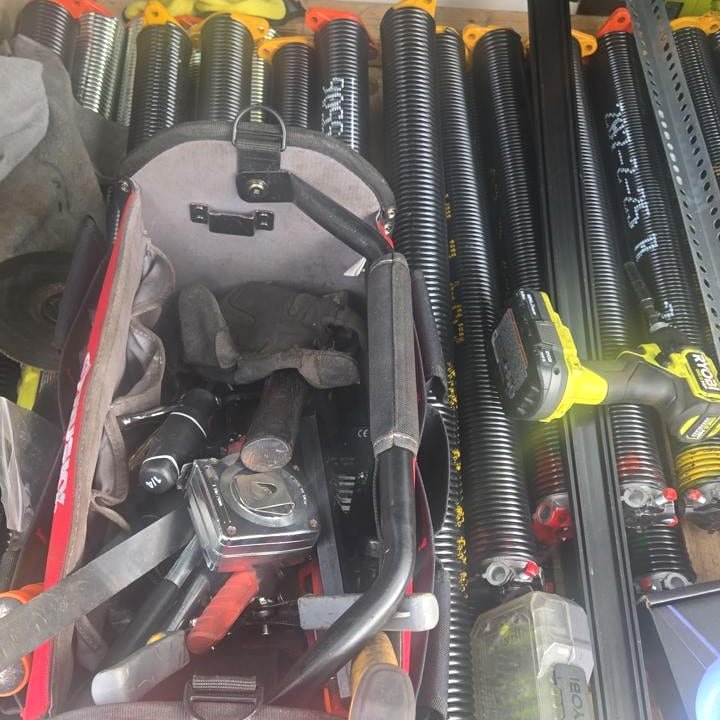
Anything involving the springs, cables, track alignment, or the opener's internal drive train belongs to a technician. That includes adjusting the springs, replacing a cable, and resetting travel limits or force settings on the opener.
What routine service does for an older door
A tune-up and safety inspection on an older door is mostly about the parts that damp attacks. A technician lubricates the hinges, rollers, and pivot points; checks the springs and cables; verifies the track is aligned; and tests the door's balance and the opener's safety reverse. That work does not prevent every spring failure, but it does catch the worn hinge or dragging roller that is adding load to the system, and it catches a frayed cable before it lets go.
If your door has already broken a spring, or if it feels heavier or sits crooked after this wet season, call Liv Garage Door Repairs & Service at (425) 386-7589. The company serves Auburn, Kent, Federal Way, Renton, Tacoma, Puyallup, Seattle, Enumclaw, Maple Valley, Covington, Bonney Lake, and Sumner, and offers 24/7 emergency dispatch. Regular hours are Monday through Saturday, 7:00 AM to 8:00 PM, with Sunday emergency service only. You can also reach the office at info@livgaragedoors.com or at 5548 34th St SE, Auburn, WA 98092.