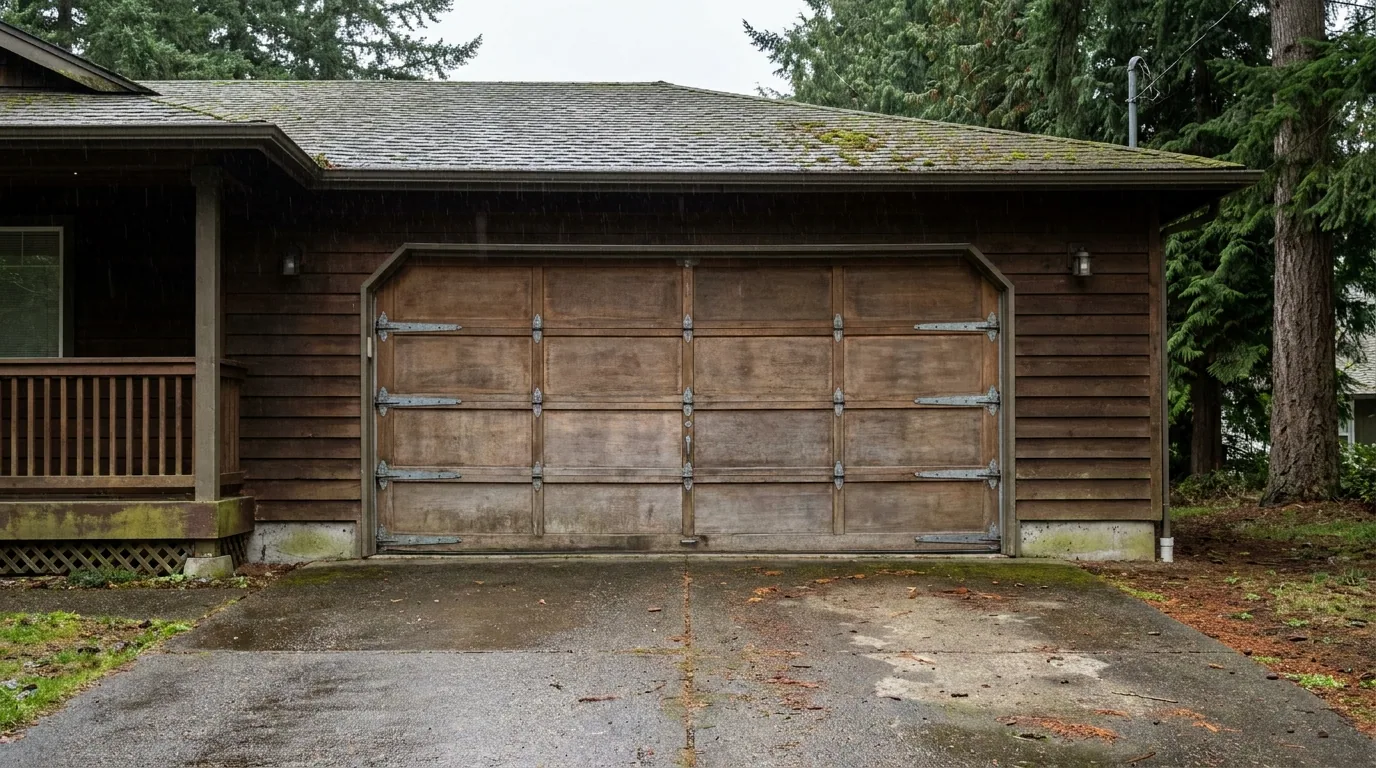
A single-car door in a detached garage is a different animal from the wide double door on an attached garage. There is one panel width instead of two, a shorter run of track, and in a lot of the older detached garages around Auburn and the surrounding suburbs, very little clearance above the door. When a door like that starts to bind, catch, or drag on one side, the cause is often in the geometry rather than in the spring. The trick is narrowing down whether the door itself has changed shape, whether the tracks have moved, or whether a hinge or roller has worn enough to throw the panel off line. This article walks through what you can observe safely from outside the door, and where the work belongs to a technician.
Why low headroom makes a single-car door less forgiving
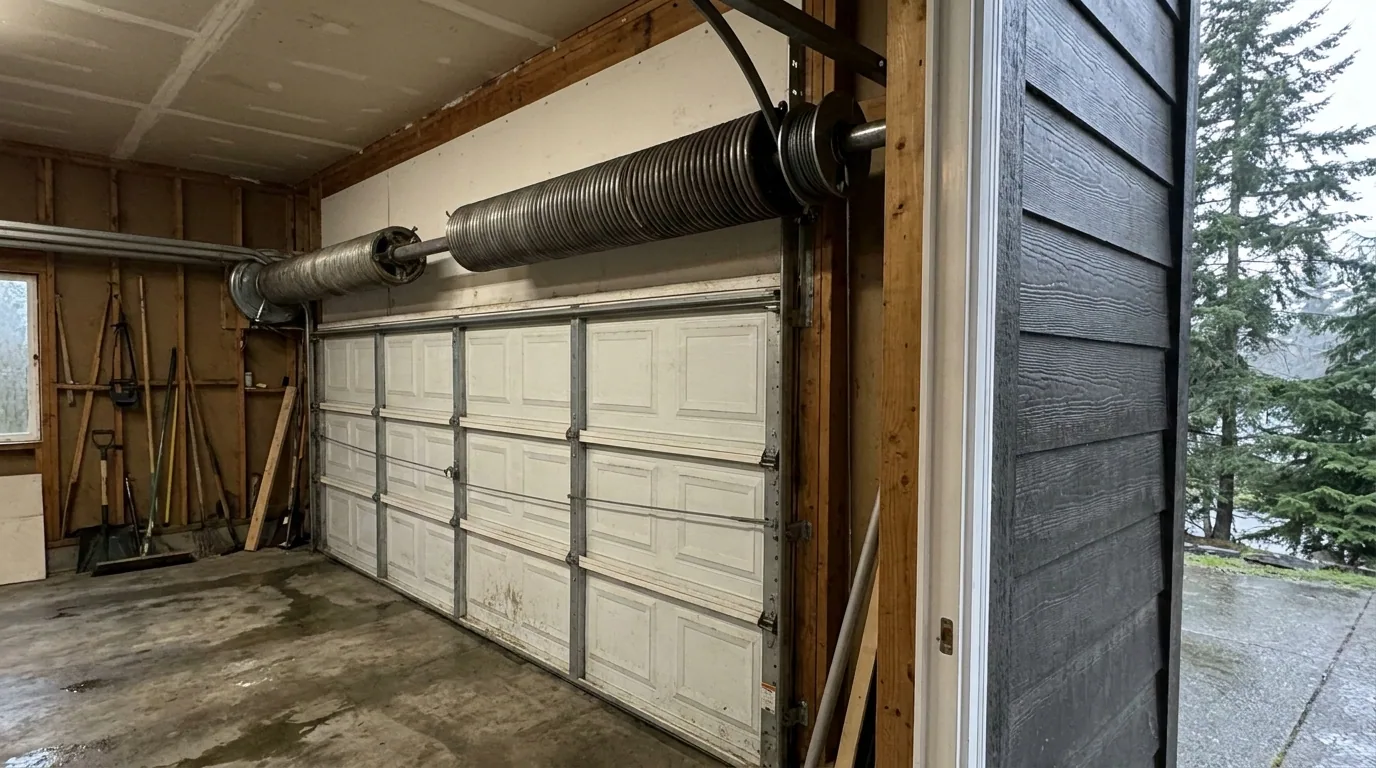
A sectional door needs room to make the transition from vertical to horizontal. In a standard-height garage the door panels curve back through a radius and then travel horizontally on the overhead track. In a low-headroom garage, that curve is tighter, the horizontal run is shorter, and the panels have less room to move before something contacts something else.
That tight geometry means a small change has a bigger effect. A hinge that has worn a little, a roller that has flat-spotted, or a track that has shifted a quarter inch can all cause a bind that would go unnoticed on a roomier installation. The door is not necessarily failing. It is just working with less margin.
Single-car doors also tend to be lighter and narrower, which means they are more sensitive to uneven loading. If one spring is doing more work than the other, or if the door has settled slightly on one side, the panel can rack and drag against the track. That is one reason a single-car door sometimes binds on one side only.
What you can safely observe from outside the door
With the garage empty and the door closed, stand back and watch the door through a full cycle from the outside. You are looking for patterns, not diagnosing a specific part.
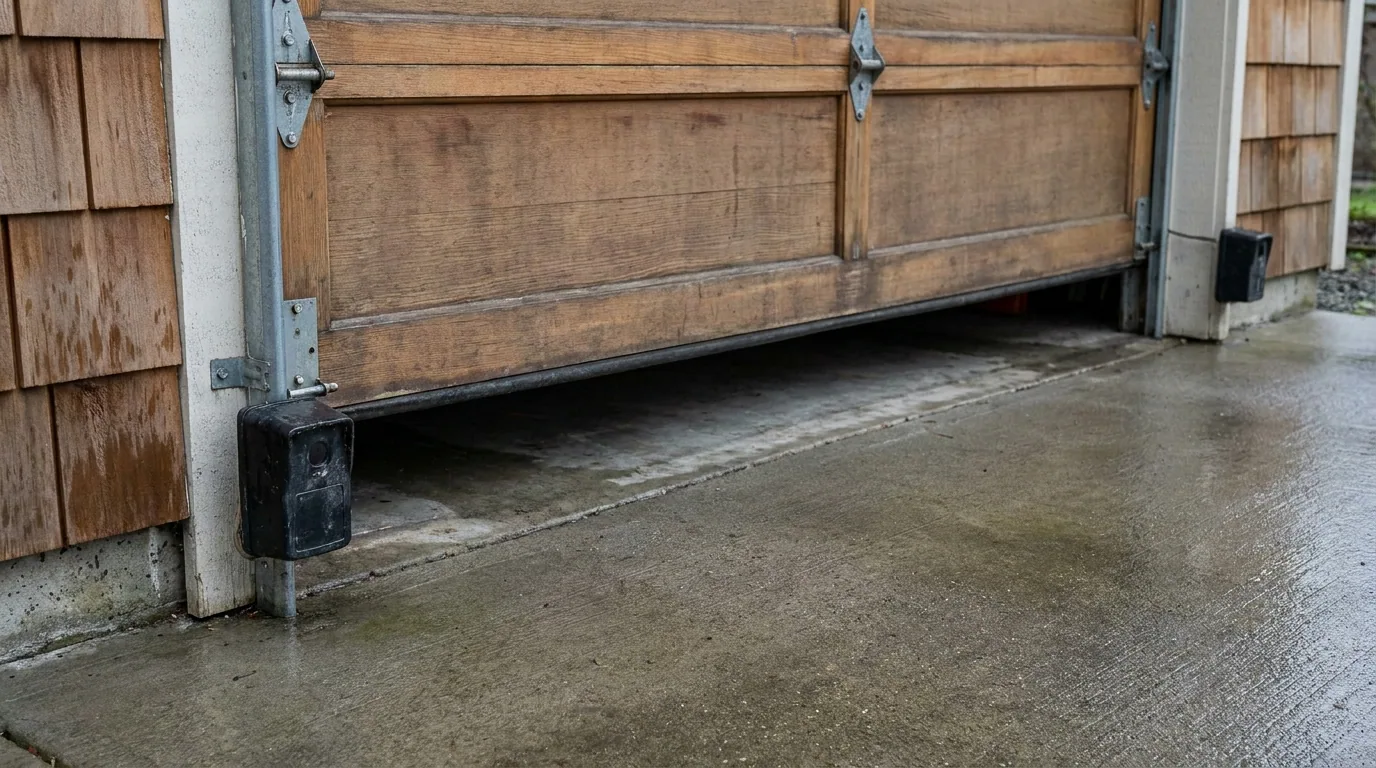
- The door sits crooked when closed. One corner is lower than the other, or there is a visible gap along the top or one side. That can point to a snapped cable, a broken spring, or a bent track, and a technician can tell which by inspecting the hardware.
- The door binds at the same point every time. If it catches at the same height on every cycle, that is a useful clue. It suggests something in the track or the panel geometry rather than a random hardware failure.
- The door feels heavier in normal use. If you have to press the button twice or the door seems to labor, the spring system may not be carrying its share of the weight. Do not try to lift the door to check. That is technician work.
- A new noise at the start of a cycle. A pop, a scrape, or a grind that was not there before is worth noting, along with exactly when in the cycle it happens.
Write down what you see and when it happens. That record is more useful to a technician than a general description of "it's sticking."
Is it the door, or is it the tracks?
This is the question that matters most, and it is usually answerable by watching the door rather than by touching anything.
If the door binds at the same point in every cycle and the panels stay square to each other, the tracks are a strong suspect. Tracks can be knocked out of alignment by a bump from a car, by a shifting slab, or by years of the door pulling against them. A track that is out of plumb or out of parallel will cause the rollers to bind, and the door will drag at the same spot every time.
If the door sits crooked, hangs at an angle, or one side lags behind the other, the door itself or its lifting hardware is the more likely suspect. A snapped cable will let one side drop. A broken torsion spring cannot hold the door's weight. A bent panel or a worn hinge can throw the door off line. These are different failures with different fixes, and a technician can separate them by inspecting the springs, cables, and hinges directly.
If the door runs smoothly but the opener strains or the door reverses partway, the problem may be neither the door nor the tracks. It may be a travel-limit setting or a force setting on the opener. That is a separate diagnosis, and it is covered below.
Where the opener fits into a binding complaint
Not every bind is mechanical. A door that opens a little and then reverses, or stops short of the floor, is often a travel-limit or force-setting problem rather than a physical obstruction. The opener is being told to stop, or it is sensing resistance and backing off.
A photo-eye plays a role only in the closing direction. A blocked or misaligned photo-eye will reverse a door that is on its way down, and only while it is closing. It has no role in a door that will not start, opens a little then reverses, or stops short on the way up. If your door reverses before it reaches the floor, the photo-eye is not the first place to look.
If the motor runs but the door does not move, a stripped opener gear is one possibility. It lets the motor turn without driving the door. That is a repair for a technician, not something to diagnose by opening the opener housing.
What belongs to a technician
Torsion springs, cables, and the opener drive train are under tension and are not homeowner work. Do not attempt to adjust, lubricate, or inspect them yourself. The same goes for testing the door's balance by hand, lifting the door to feel its weight, or pulling the emergency release and moving the door manually. Those steps are how a technician confirms a diagnosis, and they carry real risk when done without the right tools and training.
What you can do is keep the door and tracks clear of obstructions, note when and where the bind happens, and describe the pattern accurately when you call. For a binding door in a low-headroom detached garage in Auburn or the surrounding areas, a technician can inspect the springs, cables, tracks, and hinges and tell you which part of the system has moved. Liv Garage Door Repairs & Service can be reached at (425) 386-7589 or info@livgaragedoors.com, and serves Auburn, Kent, Federal Way, Renton, Tacoma, Puyallup, Seattle, Enumclaw, Maple Valley, Covington, Bonney Lake, and Sumner.